- Home
- Migraine Treatments
Migraine Treatment: Acute Relief, Prevention, and Long-Term Management
Migraine treatment requires more than a quick fix. The most effective approach combines acute relief during an attack, preventive strategies to reduce frequency, and long-term management to calm neurological sensitivity and improve stability over time.
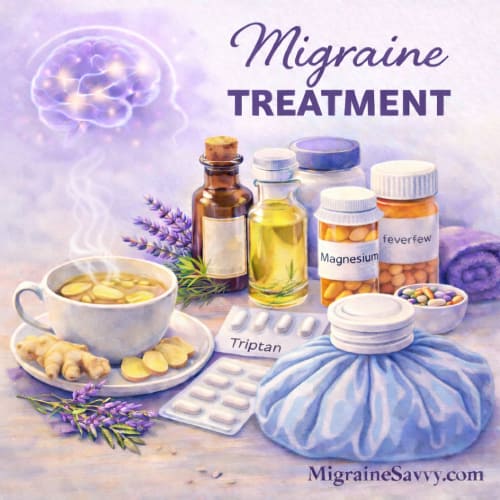 Medical and natural migraine treatment options including triptans, supplements and supportive therapies
No single treatment works for everyone. The right plan depends on your migraine type, attack frequency, overall health, medication history, and how your symptoms present. What works for one person may not work for another.
Effective treatment usually focuses on two core goals:
- Stopping or reducing pain during an attack
- Lowering the frequency, severity, and overall disruption of future attacks
Understanding the major treatment categories allows you to work more confidently with your healthcare provider and make informed decisions about your care.
Acute Migraine Treatment (Stopping an Attack)
Acute treatment is used once symptoms begin. The goal is to stop or reduce pain and associated symptoms as early as possible.
Timing matters. Many acute medications work best when taken at the first sign of an attack, especially during the early pain phase.
Common acute options include:
- NSAIDs (such as ibuprofen or naproxen)
- Gepants
- Ditans
- Anti-nausea medications
- Combination medications
Some people respond well to over-the-counter medication. Others require prescription therapy. For individuals with frequent attacks, careful monitoring is essential to avoid medication overuse headache.
If attacks are becoming more frequent or harder to stop, treatment strategy may need adjustment.
For a deeper understanding of how symptoms unfold before treatment begins, see my Migraine Symptoms page.
 Cold therapy and other acute migraine treatment options used during an attack
Preventive Migraine Treatment (Reducing Frequency)
Preventive treatment is recommended when:
- Attacks occur frequently
- Acute medications are used more than 10–15 days per month
- Attacks are prolonged or disabling
- Acute treatments are not effective
Preventive therapies aim to lower overall attack frequency and reduce severity.
Options may include:
- Daily oral medications (such as beta-blockers, anticonvulsants, or certain antidepressants)
- OnabotulinumtoxinA (Botox) for chronic migraine
- Hormonal management strategies
- Neuromodulation devices
Some gepants are now approved for both acute and preventive treatment.
Prevention is not about eliminating migraine completely. It is about reducing overall neurological sensitivity and stabilizing patterns over time.
When sleep, nutrition, stress load, and activity levels are regulated, overall trigger sensitivity often decreases.
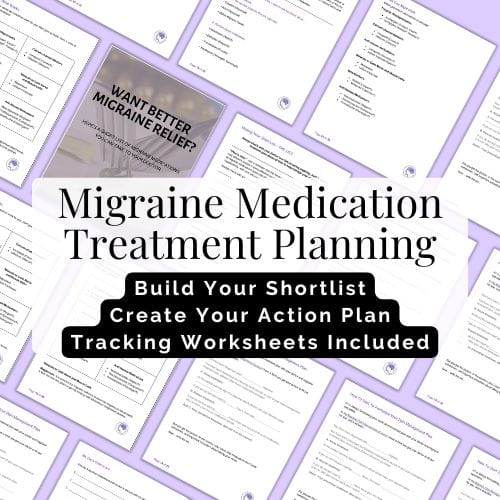
Medication Categories: What You Should Know
Migraine medications generally fall into two groups:
1. Acute (abortive) medications
2. Preventive (prophylactic) medications
Some medications treat both pain and associated symptoms such as nausea or sensory sensitivity.
Key considerations include:
- Frequency of use
- Risk of medication overuse
- Side effect profile
- Interaction with other medications
- Cardiovascular risk factors
No medication is universally “best.” The most effective treatment plan is individualized.
You might like to read:
Non-Medication Migraine Treatment Strategies
Medication alone is rarely the entire answer.
Clinical guidelines increasingly support combining pharmacological and behavioral strategies for improved outcomes.
Long-term improvement often requires stabilizing daily rhythms and reducing overall trigger load.
Evidence-informed strategies may include:
- Consistent sleep schedule
- Stable meal timing
- Light, regular exercise
- Magnesium or other targeted supplementation (if appropriate)
These approaches help regulate the nervous system and may reduce sensitivity to triggers over time.
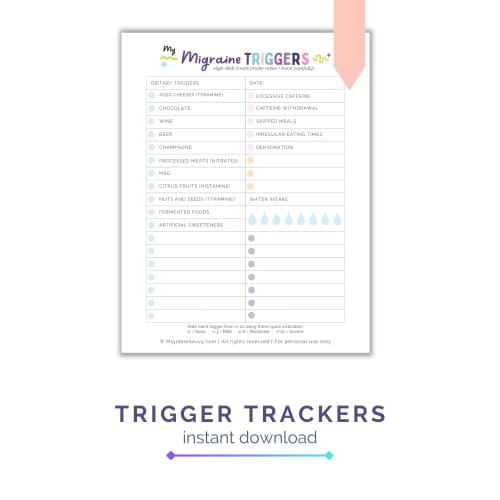
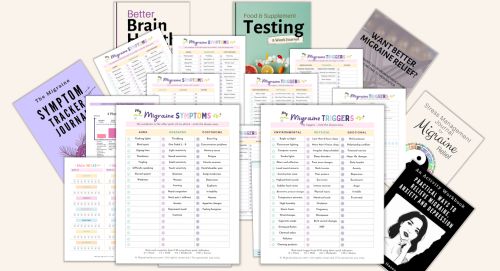
If you are working on identifying trigger patterns, see my Migraine Triggers page. And check out my Migraine Trigger Trackers in the bookstore.
Treatment for Specific Migraine Types
Treatment may vary depending on migraine subtype, including:
- Migraine with aura
- Chronic migraine
- Vestibular migraine
- Hormonal migraine
- Migraine without headache (acephalgic migraine)
Accurate diagnosis matters. If symptoms change significantly or new neurological features appear, reevaluation is appropriate. You can read more about Migraine Types here.
When Migraine Treatment Is Not Working
If your current treatment plan is not reducing frequency or severity, consider:
- Has the diagnosis been confirmed?
- Is medication being taken early enough?
- Is medication overuse contributing?
- Has frequency progressed to chronic migraine?
- Has your diagnosis shifted from episodic to chronic?
- Are lifestyle patterns amplifying attacks?
Escalation to a headache specialist may be appropriate if:
- Attacks occur more than 15 days per month
- Multiple treatments have failed
- Symptoms are worsening
- Neurological changes are new or unusual
Reevaluation is not failure. It is part of long-term management.
Working With Your Doctor
Preparation leads to more productive appointments and clearer treatment decisions.
Tracking attack frequency, timing, medication response, and symptom patterns allows for more productive appointments.
Important details to document include:
- Time of onset
- Severity and duration
- Associated symptoms
- Medication timing and response
- Possible triggers in prior 24–48 hours
Clear documentation helps distinguish between migraine progression, trigger stacking, medication overuse, or other headache disorders.
A Strategic Approach to Long-Term Management
Migraine is a neurological condition, not simply a headache disorder.
Effective management is cumulative and layered.
Acute care reduces immediate suffering.
Preventive therapy lowers frequency.
Lifestyle stabilization reduces vulnerability.
Education increases confidence.
The goal is measurable improvement over time.
It's fewer attacks, shorter duration, faster recovery, and improved quality of life.
Progress often happens gradually — through refinement rather than dramatic change.
Further Reading on Migraine Treatment
Acute (Abortive) Migraine Treatment
Preventive & Long-Term Treatment Plans
Working With Healthcare Providers
- Practical Migraine Doctor Tips to Save You Time, Money and Energy
Medication-Specific Guides
- Is Botox for Migraine Safer Than Aspirin?
- Botox Migraine Treatment is Covered Under Medicare in Australia
Insurance & Access Questions
Surgical & Advanced Interventions
Ready to take the next step?
Choose the next step that fits where you are right now.

CATEGORIES
Migraine Types
Symptoms
Migraine Causes
Migraine Triggers
Associated Migraine Conditions
Treatment Options
Prevention Strategies
Medications
Migraine Relief
Complementary Treatments
Migraine Help
Food & Diets
Recipes
Meditation
Your Migraine Stories
Patient Education on Migraine Headaches
MORE SUPPORT
Free Printable Downloads
Migraine Relief Secrets 5-Week eCourse
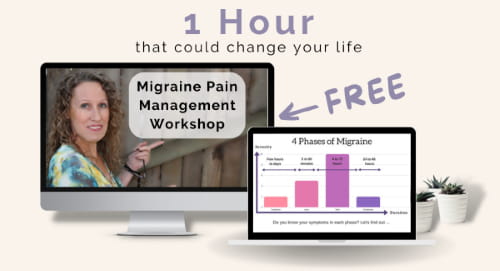
Free Migraine Pain Management Workshop
Free Module 1 - Migraine Pain Management Course
Free Brain Health Challenges
NEWSLETTER
Practical Tips & Tools for
migraine prevention
Get weekly updates.
CONTACT ME
contact-me@migrainesavvy.com
PRIVACY // TERMS & DISCLAIMERS // REFUND POLICY // AFFILIATE DISCLOSURE // ADVERTISE // CONTACT // SITEMAP // DONATE // SHOP
Medical Disclaimer: The information on MigraineSavvy.com is provided for educational purposes only and should not be used as a substitute for professional medical advice or psychological advice, diagnosis, or treatment. Always consult your healthcare provider before making any healthcare decisions. No content on this website establishes a doctor-patient relationship, and MigraineSavvy.com does not provide medical advice or assume any liability for how the information is used.
By using this website, you agree to the Terms of Use and Privacy Policy.
Copyright © 2010- MigraineSavvy.com. All rights reserved regardless of links or attributions. Content may not be reproduced in any form.

Powered by Solo Build It