- Home
- Triggers
Migraine Triggers: Identify Your Patterns to Improve Prevention
Migraine triggers are often blamed for attacks - chocolate, red wine, stress, weather - but the reality is more complex than a simple cause and effect list.
A migraine trigger is not the root cause of an attack. It is a stressor that pushes a sensitized nervous system closer to threshold.
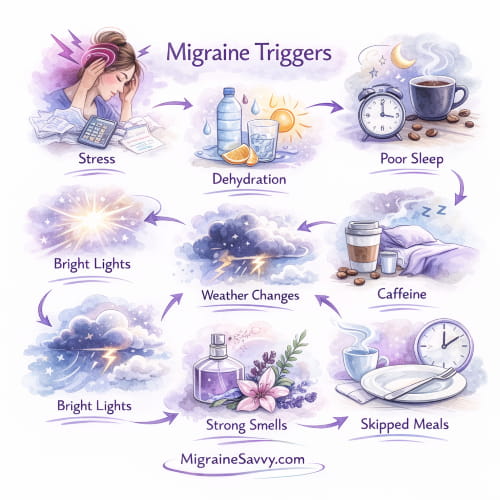 Common migraine triggers that activate an already sensitive nervous system. Identifying patterns improves prevention.
Not every exposure causes an attack. And not every attack has an obvious trigger.
Understanding how triggers work and how they accumulate is one of the most powerful steps you can take toward prevention.
What Are Migraine Triggers?
Migraine triggers are internal or external factors that increase neurological load and make an attack more likely.
Some common examples include:
- Hormonal shifts
- Sleep disruption
- Stress
- Certain foods or alcohol
- Weather changes
- Sensory overload
But here is what most lists fail to explain:
Not every trigger causes an attack every time.
Your brain has a threshold. When total stress load exceeds that threshold, symptoms begin.
This is why one glass of wine might be fine one day and debilitating the next.
It is rarely one trigger - it is how many stressors are stacking at once.
The Trigger Threshold Concept
Migraine often follows a “threshold model.”
Think of your nervous system as having a daily capacity.
Each stressor — lack of sleep, hormonal shift, skipped meal, dehydration, emotional strain, weather change — adds to the load.
Individually, they may not cause an attack.
Stacked together, they can.
When cumulative load exceeds your threshold, an attack occurs.
This explains why:
- The same trigger does not cause an attack every time
- Avoiding one trigger may not prevent all attacks
- Attacks sometimes seem unpredictable
Understanding threshold load is more helpful than blaming one item.
Why Migraine Triggers Are Difficult to Identify
Many people assume a single food or event “caused” their attack. And because a migraine unfolds in phases, it can be difficult to identify what truly contributed.
In reality:
- Triggers often accumulate over 24–72 hours before pain begins
- Early prodrome symptoms may be mistaken for triggers (such as chocolate cravings)
- Hormonal shifts may amplify other triggers
- Stress withdrawal (not just stress itself) can provoke attacks
Triggers also interact with other stressors, and combinations matter. They can change over time. For example, caffeine may help in one situation and worsen symptoms in another. Hormonal triggers may shift during perimenopause. Sleep deprivation may amplify sensitivity to light or smell.
This is why tracking patterns over time is more effective than guessing.
When a “Trigger” Is Actually a Symptom
Sometimes what feels like a trigger is actually an early symptom.
During the prodrome phase, food cravings, mood changes, neck stiffness, or sensory sensitivity can appear before pain begins. The migraine process may already be underway.
You can read more about how migraine unfolds in phases in Migraine Symptoms.
Common Categories of Migraine Triggers
Physiological Triggers
These include internal body shifts such as:
- Hormonal fluctuations (menstrual cycle, perimenopause, pregnancy, birth control)
- Irregular sleep (too much or too little)
- Skipped meals or unstable blood sugar
- Overexertion
These triggers are often related to regulation and rhythm.
If hormonal shifts are prominent, see Menstrual Headaches: How Do You Stop Them Naturally?

Dietary Triggers
Food-related triggers vary widely and affect only some individuals.
Commonly reported examples include:
- Alcohol (especially red wine)
- Aged cheeses
- Processed meats containing nitrates
- Monosodium glutamate (MSG)
- Caffeine (both excess and withdrawal)
- Artificial sweeteners
However, food cravings during the prodrome phase may be mistaken for triggers.
For example, chocolate cravings may occur because an attack has already begun neurologically.
Environmental Triggers
Environmental sensitivity is common in migraine.
Reported triggers include:
- Strong scents (perfume, smoke, incense)
- Bright or flickering light
- Sudden weather changes
- Barometric pressure shifts
- Loud noise
- Poor indoor air quality
For scent sensitivity, see Smoke is a Guaranteed Migraine Trigger.
Stress and Emotional Load
Stress is one of the most reported triggers.
But attacks may occur:
- During high stress
- Or after stress resolves
Emotional tension, suppressed anger, or prolonged anxiety can also lower threshold.
See How to Recognize Your Migraine Headache Triggers.
How to Identify Your Personal Migraine Triggers
Rather than eliminating everything at once, use a structured approach:
- Track early symptoms - record the 24–48 hours before each attack. This will help you notice whether symptoms may have begun earlier than you thought.
- Note sleep, stress, food, hydration, hormonal timing, and environmental exposures.
- Note timing of medication.
- Look for patterns over weeks, not days - watch for stacking patterns rather than isolated events.
The goal is not perfection.
The goal is clarity.
Avoid guessing. Clear documentation helps distinguish true triggers from early symptoms, medication overuse patterns, and coincidence.
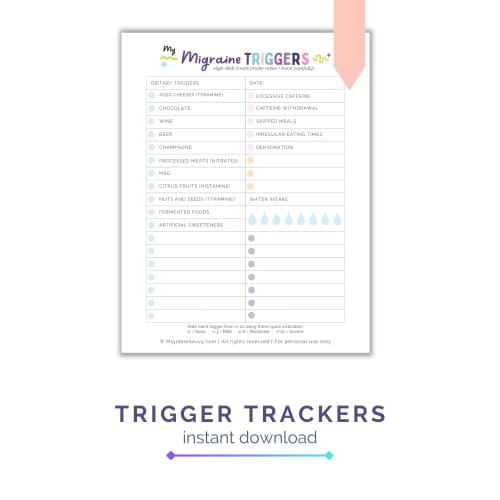
If you would like guided pages for tracking patterns, the Printable Migraine Symptom Tracker provides structured templates for identifying triggers, symptom timing, and recovery patterns.
Can Avoiding Triggers Prevent Migraine?
Avoiding known triggers can reduce frequency. But prevention is broader than elimination.
Long-term improvement often involves:
- Nervous system regulation
- Consistent sleep patterns
- Stress modulation
- Stable nutrition
- Strategic medication timing
The goal is not to eliminate every possible trigger. It is to lower overall load and raise resilience.
What Actually Helps Reduce Trigger Sensitivity
Avoidance alone is rarely enough.
Improving overall resilience may reduce vulnerability to triggers.
Helpful strategies may include:
- Consistent sleep schedule
- Stable meal timing
- Hydration
- Stress regulation techniques
- Regular light exercise
- Magnesium supplementation (if appropriate — discuss with your doctor)
Education and structured self-care improve confidence and reduce reactivity over time.
If you want a guided, step-by-step way to reduce trigger load and build resilience, you can use the Migraine Trigger Trackers I created that are in the bookstore.
When to Reevaluate Your Trigger Patterns
Triggers can change.
Hormones shift.
Stress levels evolve.
Medication patterns alter sensitivity.
If attacks are increasing in frequency or becoming daily, it may indicate:
- Medication overuse
- Chronic migraine progression
- New underlying issue
Reevaluation with a healthcare provider is appropriate when patterns shift significantly.
A Final Word
You cannot control every variable.
But you can learn your patterns.
When you understand your threshold, prevention becomes more strategic and less reactive.
Further Reading on Migraine Triggers
Foundational Trigger Overviews
Food & Chemical Triggers
Environmental Sensitivities
Hormonal & Physiological Patterns
Trigger Identification Strategies
Ready to take the next step?
Choose the next step that fits where you are right now.



CATEGORIES
Migraine Types
Symptoms
Migraine Causes
Migraine Triggers
Associated Migraine Conditions
Treatment Options
Prevention Strategies
Medications
Migraine Relief
Complementary Treatments
Migraine Help
Food & Diets
Recipes
Meditation
Your Migraine Stories
Patient Education on Migraine Headaches
MORE SUPPORT
Free Printable Downloads
Migraine Relief Secrets 5-Week eCourse
Free Migraine Pain Management Workshop
Free Module 1 - Migraine Pain Management Course
Free Brain Health Challenges
NEWSLETTER
Practical Tips & Tools for
migraine prevention
Get weekly updates.
CONTACT ME
contact-me@migrainesavvy.com
PRIVACY // TERMS & DISCLAIMERS // REFUND POLICY // AFFILIATE DISCLOSURE // ADVERTISE // CONTACT // SITEMAP // DONATE // SHOP
Medical Disclaimer: The information on MigraineSavvy.com is provided for educational purposes only and should not be used as a substitute for professional medical advice or psychological advice, diagnosis, or treatment. Always consult your healthcare provider before making any healthcare decisions. No content on this website establishes a doctor-patient relationship, and MigraineSavvy.com does not provide medical advice or assume any liability for how the information is used.
By using this website, you agree to the Terms of Use and Privacy Policy.
Copyright © 2010- MigraineSavvy.com. All rights reserved regardless of links or attributions. Content may not be reproduced in any form.

Powered by Solo Build It