- Home
- Medications
Migraine Medications: Rescue & Preventive Options to Discuss With Your Doctor
If you live with migraine, navigating the world of migraine medications can feel overwhelming. There are dozens of options, each with different purposes, side effects, and ways of taking them. But when you understand the main categories and how they fit into your treatment plan, you can have more productive conversations with your doctor and make more informed choices.
This page is your complete overview of migraine medications, from rescue treatments you take during an attack to preventive options that may reduce their frequency over time. You’ll also find links to detailed guides on each type of medication, so you can dig deeper into the ones your doctor recommends.
Disclaimer: This is not medical advice. Always consult your doctor before starting or changing migraine treatment.
How Migraine Medications Are Categorized
When you and your doctor discuss migraine treatment, medications are usually grouped into two main categories:
- Acute (rescue) medications - taken during a migraine attack to stop or lessen the pain and other symptoms.
- Preventive medications - taken regularly to reduce the number, severity, or duration of attacks over time.
You’ll also hear about:
Prescription vs. over-the-counter options. Some treatments require a doctor’s prescription, while others are available without one.
Migraine-specific vs. non-migraine medications. Certain drugs were developed specifically for migraine (like triptans), while others (such as beta blockers) were originally designed for other conditions but can help some people with migraine.
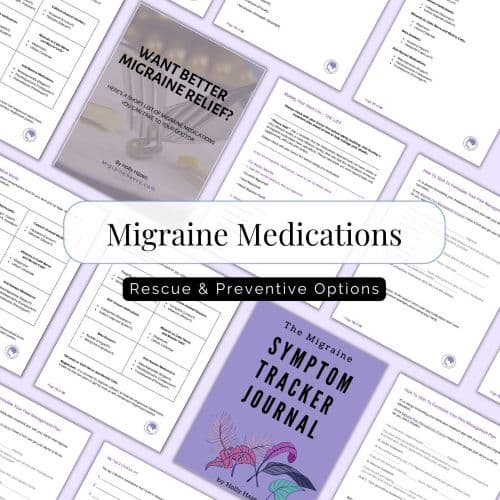
Tip: Keeping an organized record of the medications you’ve tried (and how they worked) can save you time and frustration at appointments. My Printable Migraine Medication List helps you track what’s working, what’s not, and what you want to discuss next with your doctor.
Acute (Rescue) Migraine Medications
Acute (also called rescue) migraine medications are designed to stop or reduce an attack once it starts. The goal is to act quickly, ideally at the very first signs of migraine, to minimize pain, shorten duration, and reduce related symptoms like nausea and sensitivity to light or sound.
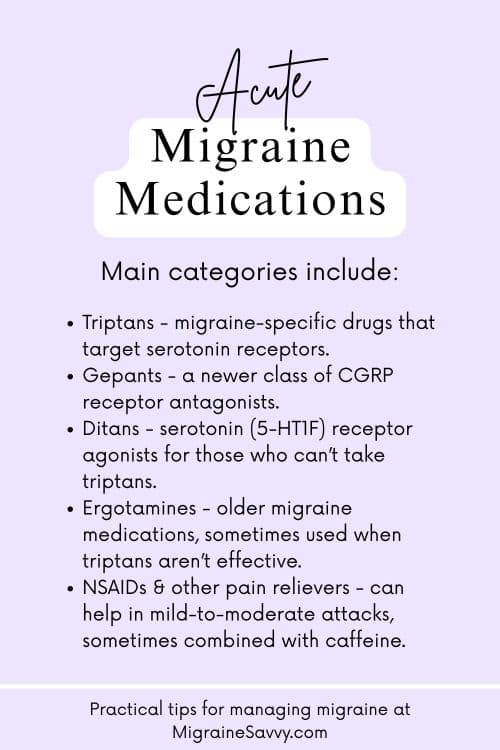
Main categories include:
- Triptans - migraine-specific drugs that target serotonin receptors.
- Gepants - a newer class of CGRP receptor antagonists.
- Ditans - serotonin (5-HT1F) receptor agonists for those who can’t take triptans.
- Ergotamines - older migraine medications, sometimes used when triptans aren’t effective.
- NSAIDs & other pain relievers - can help in mild-to-moderate attacks, sometimes combined with caffeine.
Tips: Some acute medications come in nasal spray or injectable forms for faster relief - important if nausea or vomiting make swallowing tablets difficult.
When you’re in the middle of an attack, remembering medication names, doses, and timing can be almost impossible. I keep notes on a little recipe card, or you could use this form to get all the right details so you (or someone helping you) can act fast without scrambling for details.
Preventive Migraine Medications
Preventive (also called prophylactic) migraine medications are taken regularly, often daily or monthly, to help reduce the frequency, severity, or duration of attacks over time.
They are especially useful if you:
- Have frequent attacks (more than 4–5 days per month)
- Experience prolonged or disabling symptoms
- Cannot tolerate acute medications
Main preventives include:
- Beta blockers - e.g., propranolol, metoprolol (often first choice if no asthma or certain heart conditions)
- Anticonvulsants - e.g., topiramate, valproic acid (use with caution; can have cognitive or mood side effects)
- CGRP monoclonal antibodies - e.g., Aimovig (erenumab), Ajovy (fremanezumab), Emgality, Vyepti (injections or IV infusions, usually monthly or quarterly)
- Preventive gepants - e.g., atogepant (Qulipta), rimegepant (Nurtec ODT for prevention).
- Antidepressants - e.g., amitriptyline, venlafaxine.
RELATED ARTICLES
Migraine Prevention Medications - how to decide if it’s time to try a preventive and what to expect in the first few months
Plan with precision: Preventive therapy works best when you and your doctor have a clear overview of what you’ve tried, what’s worked, and what hasn’t.
My Printable Migraine Medication List includes space for both acute and preventive options - helping you track results, side effects, and adjustments over time.
New Migraine Medications
The last few years have brought the biggest leap in migraine-specific treatments in decades.
These newer drugs target migraine mechanisms more directly than older “borrowed” medications, offering additional options for people who haven’t found relief with traditional therapies.
Key classes include:
- CGRP monoclonal antibodies (preventive) - Aimovig (erenumab), Ajovy (fremanezumab), Emgality (galcanezumab), and Vyepti (eptinezumab)
- Gepants (acute & preventive) - Nurtec ODT (rimegepant), Ubrelvy (ubrogepant), Qulipta (atogepant)
- Ditans (acute) - Reyvow (lasmiditan)
- New formulations of existing drugs - such as faster-dissolving triptans and nasal sprays
These drugs are not suitable for everyone, and some are still relatively new to long-term safety studies. Costs and insurance coverage can also vary.
Stay current, stay prepared! Migraine treatment options evolve quickly. What wasn’t available last year could be the best fit for you now.
My Printable Migraine Medication List includes the latest CGRP drugs, gepants, and ditans, so you can walk into your next doctor’s appointment with an up-to-date shortlist in hand.
Over-the-Counter Migraine Medications
For some people, over-the-counter (OTC) medications can be enough to ease mild to moderate migraine attacks, especially when taken early. While they’re widely available, OTC drugs still carry risks and may not be suitable for frequent use.
Common OTC options include:
- NSAIDs - ibuprofen (Advil, Nurofen), naproxen (Aleve), diclofenac
- Acetaminophen (Paracetamol) - Tylenol, Panadol
- Combination analgesics - acetaminophen + aspirin + caffeine (e.g., Excedrin Migraine)
Important cautions:
- Regular use (more than 10–15 days per month) can lead to medication overuse headache (MOH)
- NSAIDs can cause stomach irritation, ulcers, or bleeding
- Acetaminophen in high doses can damage the liver
- Caffeine may worsen rebound headaches in some people
>> See more: Over the Counter Migraine Medication
Why include OTC meds in your plan?
Even if you rely on prescription options, OTC drugs may help for breakthrough attacks, or while you wait for prescriptions to be filled.
The Printable Migraine Medication List organizes OTC choices alongside prescription options, with space to note what you’ve tried and how well it worked.
Side Effects & Cautions
All migraine medications can cause side effects and the type, frequency, and severity vary widely depending on the drug class and your personal health profile. Always read the patient information leaflet and talk to your doctor or pharmacist about possible reactions.
Common side effects by drug class:
- Triptans (e.g., sumatriptan, rizatriptan) - flushing, tingling, dizziness, tightness in chest or throat (not for people with certain heart or vascular conditions)
- Gepants (e.g., ubrogepant, rimegepant) - nausea, sleepiness, mild stomach upset, dry mouth (generally fewer cardiovascular concerns than triptans)
- Ditans (e.g., lasmiditan) - dizziness, fatigue, may impair driving for 8 hours, not habit-forming, but sedation is common
- Ergotamines - nausea, muscle pain, tingling in fingers/toes, risk of overuse headache, avoid in pregnancy
- NSAIDs & OTC Options (e.g., ibuprofen, naproxen) - stomach irritation, ulcers, kidney effects (use with caution if you have GI or kidney problems)
- Preventives (beta blockers, anticonvulsants, antidepressants, CGRP) - vary widely by class; may include weight changes, fatigue, mood changes, or low blood pressure
Special populations to discuss with your doctor:
- Pregnancy & breastfeeding - many migraine drugs are not recommended
- Children & teens - dosing and safety vary greatly
- Older adults - higher risk of side effects, more likely to have drug interactions
- Cardiovascular risk - some acute drugs (e.g., triptans, ergotamines) may be unsafe if you have heart disease or uncontrolled hypertension
Important: Overusing acute medications (even over-the-counter) can lead to medication overuse headache (MOH), which can make migraines more frequent and harder to treat.
Feeling Overwhelmed by Migraine Medications?
Don’t try to remember every option - take a clear, organized list to your next appointment.
Get my Printable Migraine Medication List - a 26-page, easy-to-use PDF that organizes:
- Over-the-counter options
- Rescue medications
- Preventives
- New treatments
- Side effects overview
Print it, mark your top choices, and work through them with your doctor.
>> Download a copy now for $4.99
Rescue Migraine Medications to Keep You Out of the ER
Sometimes a migraine attack escalates so fast or so severely that you may be tempted to head straight to the emergency room.
In many cases, having access to fast-acting rescue medications, prescribed and supervised by your doctor, can help you manage those severe attacks at home instead.
Important: These are not first-line treatments. They are typically used when standard acute medications (like triptans or NSAIDs) fail, or when symptoms are unusually intense. They require a prescription and a clear action plan from your doctor on when and how to use them safely.
So... work with your healthcare provider to identify which migraine medications are safe and effective for you and have them ready before you need them. Preparation can help you act faster, stay safer, and possibly avoid an ER visit.
Common Rescue Options
Discuss each of these with your doctor to see if they’re appropriate for you.
1. Injectable Triptans
Sumatriptan (Imitrex®) injection - works within minutes for many people. Ideal for attacks with vomiting or very rapid onset.
2. Nasal sprays
Triptans or dihydroergotamine for rapid absorption.
3. Dihydroergotamine (DHE)
Available as injection or nasal spray (Migranal®). Often used in ER settings, but some patients are prescribed home kits. Sometimes combined with anti-nausea medication
4. Steroids
Dexamethasone or prednisone may be given short-term to break a prolonged migraine cycle (status migrainosus). Not a long-term solution due to side effects.
5. Anti-nausea Medications (Injectable or Suppository)
Metoclopramide, prochlorperazine - can relieve nausea/vomiting and sometimes ease pain.
6. IV Infusion Cocktails (usually in clinic or ER)
May include magnesium sulfate, fluids, NSAIDs, antiemetics, and sometimes DHE. While you can’t self-administer these, some headache clinics offer urgent infusion appointments.
Why Have a Rescue Plan?
- Reduces risk of ER visits for severe attacks
- Gives you clear next steps when first-line medications fail
- Avoids medication overuse by keeping your plan structured and supervised
Tip: Keep your rescue medications ready and accessible at home, along with instructions from your doctor on when and how to use them.
If you need a complete printable checklist for all migraine medications - rescue, preventive, and over the counter - download my 26-page Migraine Medication List here:
>> Download: Printable List of Migraine Medications and Treatment Planning - $4.99 to take to your doctor.
Advanced Rescue Options for Severe Migraine
For severe or prolonged attacks (including status migrainosus), your doctor may discuss injectable or clinic-based rescue options.
These are not first-line medications. They are typically used when oral treatments fail or when vomiting prevents tablet use.
Common options include:
1. Chlorpromazine (Thorazine, Largactil)
2. Dexamethasone
3. Droperidol
4. Dihydroergotamine + Prochlorperazine (DHE 45 + Compazine)
5. Magnesium Sulfate
6. Methylprednisolone (Medrol)
7. Olanzapine (Zyprexa)
8. Prochlorperazine (Compazine)
9. Sumatriptan (Imitrex)
10. Valproic Acid (Depacon)
These medications vary in mechanism and side effect profile. They must be prescribed and supervised by your healthcare provider.
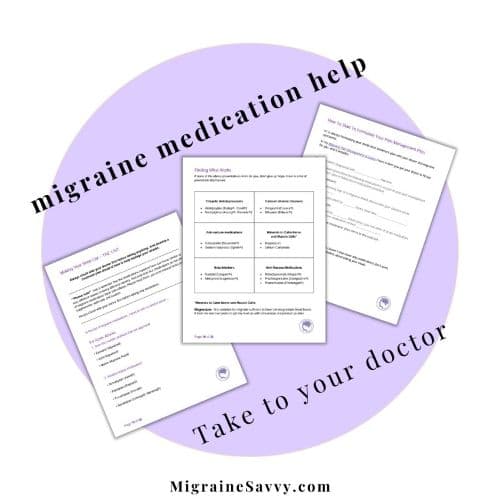
A printable summary of these 10 rescue medications is available here → Free Downloads
When to Seek Emergency Care
Most migraine attacks, while painful and disruptive, are not life-threatening.
However, there are situations where you must treat the headache as a medical emergency, even if you’ve had migraines for years.
Call emergency services immediately (for example, 911 in the U.S.) if you experience:
- A sudden, severe "thunderclap" headache that peaks in seconds to minutes
- A headache that is significantly different from your usual migraine pattern
- Weakness, numbness, or paralysis on one side of your body
- Trouble speaking, understanding speech, or confusion
- Sudden vision loss, double vision, or difficulty moving your eyes
- Headache with fever, stiff neck, rash, or sensitivity to light (possible meningitis)
- Seizure or loss of consciousness
- Headache following a head injury
- New headache during pregnancy or postpartum period
Important: These symptoms may indicate a stroke, brain bleed, infection, or other serious condition, not just migraine. Never try to "tough out" a headache if it feels different from your usual migraine or comes with alarming symptoms. It’s better to get checked quickly.
Always err on the side of caution.
Tip: I keep a Migraine Emergency Info Card in my wallet with my diagnosis, medication list, and my doctor’s contact details. This ensures I get faster, safer care if I can’t communicate during an attack.
Emergency Phone Numbers
If you experience severe or unusual symptoms, call your local emergency number immediately.
Common emergency numbers include:
- Canada + USA: 911
- China: 120
- Europe (EU): 112
- Australia: 000 (mobile 000 or 112)
- UK: 999 or 112
Mobile phones are often preset to recognize 112, 999, and 911 internationally.
Successfully managing your migraines is 50 percent education and 50 percent treatment.
~ The Migraine Brain by Dr. Carolyn Bernstein (p. 19)
Working with Your Doctor
Finding the right migraine medication often comes down to clear communication and careful tracking. Your doctor will be better able to help you if you arrive prepared with accurate information about your attacks and treatment history.
Here are some practical tools that can make your appointments more productive:
1. Track your symptoms
Track frequency, triggers, duration, response to treatments.
Record each migraine’s start time, symptoms (before-during-after), suspected triggers, and medications taken. Note the time to the pain phase. Over time, patterns may emerge that guide both preventive and acute treatment choices.
Use my free migraine diary & tracker to record frequency, triggers, duration, and treatment response or even more detailed is my symptom tracker.
>> Get the Migraine Symptom Tracker here
2. Bring a shortlist
Instead of asking your doctor "What should I take?", present your top two or three preferred medications you'd like to discuss (research them first). This allows you to focus on what’s realistic for your health profile, insurance coverage, and personal comfort.
3. Questions list
Before each appointment, write down your most important questions so you don’t forget them during the visit.
4. Have a rescue plan
Know what to do if first-line treatments fail.
5. Review your plan regularly
At least once a year or if your migraines change.
Why This Matters
By walking into your appointment with a clear record, realistic shortlist, and specific questions, you give your doctor the best chance of tailoring a treatment plan that works for you.
Pro Tip: Keep both your Medication List and Symptom Tracker in a folder or binder you can grab quickly if your migraine flares unexpectedly before an appointment.
Turn Your Migraine Research into a Doctor-Ready Plan
Reading about migraine medications is one thing, presenting your options clearly to your doctor is another.
The Printable Migraine Medication List gives you:
- A full overview of migraine drug categories
- Space to track what you’ve tried
- A quick way to highlight your next 3 options
>> Download it instantly for $4.99
Make it easier on yourself. The printable list organizes all your current and potential medications (acute, preventive, and rescue) in one easy-to-use format. Just fill it in and bring it to your next appointment.

Medical References & Clinical Resources
I’ve gathered reputable, evidence-based sources so you can explore each medication class in more detail:
All medical content on MigraineSavvy.com is written and reviewed for accuracy but is not a substitute for professional medical advice. Always discuss medication choices with your healthcare provider.
FAQ - Migraine Medications
What’s the difference between rescue and preventive migraine medications?
What’s the difference between rescue and preventive migraine medications?
Answer: Rescue medications treat a migraine that’s already started. Preventives are taken daily or regularly to reduce attack frequency and severity.
How are ditans different from gepants?
How are ditans different from gepants?
Answer: Ditans (like lasmiditan) target serotonin 5-HT1F receptors and are used for acute migraine without constricting blood vessels. Gepants block CGRP receptors and can be used acutely or preventively. They work through different mechanisms.
Can I combine over-the-counter meds with prescription migraine drugs?
Can I combine over-the-counter meds with prescription migraine drugs?
Answer: Sometimes, but combinations should be discussed with your doctor to avoid side effects or medication overuse headache.
Are new migraine drugs more effective than older options?
Are new migraine drugs more effective than older options?
Answer: Some newer drugs, like CGRP monoclonal antibodies and gepants, work well for many people, but they’re not automatically better for everyone.
Let's Recap...
Ok, this is a long article, so let's recap some important key points:
Create a 3-step plan with your healthcare provider:
1. Find the right abortive medication - one that can stop or shorten your migraine if taken early.
2. Have non-oral rescue options ready - especially if vomiting prevents you from taking pills.
3. Plan for an ER visit - including written instructions from your doctor and their contact number.
Rescue migraine medications for injection are often used when:
- Triptans or ergotamines don’t work for you
- Oral medications are ineffective or not an option
- Attacks last unusually long or are extremely severe
** If you experience severe or unusual symptoms, call emergency services immediately. **
Ready to take the next step?
Choose the next step that fits where you are right now.


MIGRAINE MEDICATIONS Related Articles



Migraine Medications References:
1. WebMD (2025) Dexamethasone [Online], Available at: https://www.rxlist.com/decadron-drug.htm Original Access June 12, 2016.
2. Drugs.com (2025) Prochlorperazine side effects [Online], Available at: https://www.drugs.com/sfx/prochlorperazine-side-effects.html
3. Drugs.com (2025) Sumatriptan side effects [Online], Available at: https://www.drugs.com/sfx/sumatriptan-side-effects.html Original Access June 12, 2016.
4. FDA Drug Approval (2025) [Online], Available at: https://www.fda.gov/drugs Initial Access June 12, 2016.
Updated 18 Feb 2026.

CATEGORIES
Migraine Types
Symptoms
Migraine Causes
Migraine Triggers
Associated Migraine Conditions
Treatment Options
Prevention Strategies
Medications
Migraine Relief
Complementary Treatments
Migraine Help
Food & Diets
Recipes
Meditation
Your Migraine Stories
Patient Education on Migraine Headaches
MORE SUPPORT
Free Printable Downloads
Migraine Relief Secrets 5-Week eCourse
Free Migraine Pain Management Workshop
Free Module 1 - Migraine Pain Management Course
Free Brain Health Challenges
NEWSLETTER
Practical Tips & Tools for
migraine prevention
Get weekly updates.
CONTACT ME
contact-me@migrainesavvy.com
PRIVACY // TERMS & DISCLAIMERS // REFUND POLICY // AFFILIATE DISCLOSURE // ADVERTISE // CONTACT // SITEMAP // DONATE // SHOP
Medical Disclaimer: The information on MigraineSavvy.com is provided for educational purposes only and should not be used as a substitute for professional medical advice or psychological advice, diagnosis, or treatment. Always consult your healthcare provider before making any healthcare decisions. No content on this website establishes a doctor-patient relationship, and MigraineSavvy.com does not provide medical advice or assume any liability for how the information is used.
By using this website, you agree to the Terms of Use and Privacy Policy.
Copyright © 2010- MigraineSavvy.com. All rights reserved regardless of links or attributions. Content may not be reproduced in any form.

Powered by Solo Build It