- Home
- Alternative Treatments
Alternative Treatment for Migraines: Evidence-Based Non-Drug Options
Alternative treatment for migraines may be appropriate when standard therapies are not fully controlling symptoms or breakthrough pain continues despite medication.
Medication is often necessary, but it is not always sufficient.
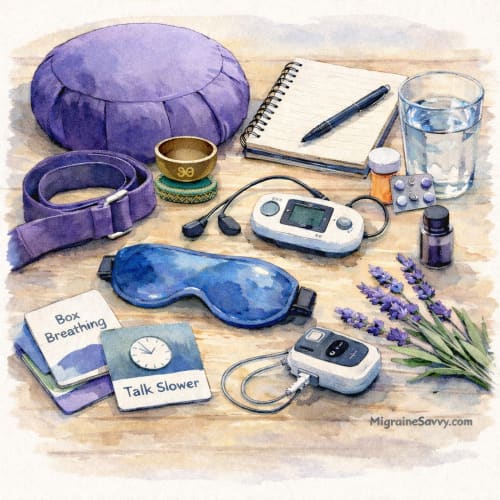 Evidence-based non-drug options that support migraine management without medication
Alternative treatments are not replacements for medical care. They are complementary strategies that may reduce severity, shorten attacks, improve stress regulation, and help prevent escalation.
Some approaches are supported by strong clinical evidence. Others have moderate research backing but are widely used in headache practice. The key is selecting options that are credible, practical, and integrated alongside appropriate medical supervision.
Below are eight alternative treatment options most commonly recommended by headache specialists and supported by research to varying degrees.
What Is an Alternative Treatment for Migraines?
An alternative treatment for migraines refers to a non-pharmaceutical therapy used either:
- Alongside medication
- When medication is not tolerated
- As part of long-term prevention
- To reduce reliance on acute drugs
These therapies aim to:
- Reduce attack frequency
- Shorten duration
- Decrease intensity
- Improve stress regulation
- Enhance recovery between attacks
Most specialists now recommend combining conventional medicine with selected complementary approaches rather than relying on one method alone.
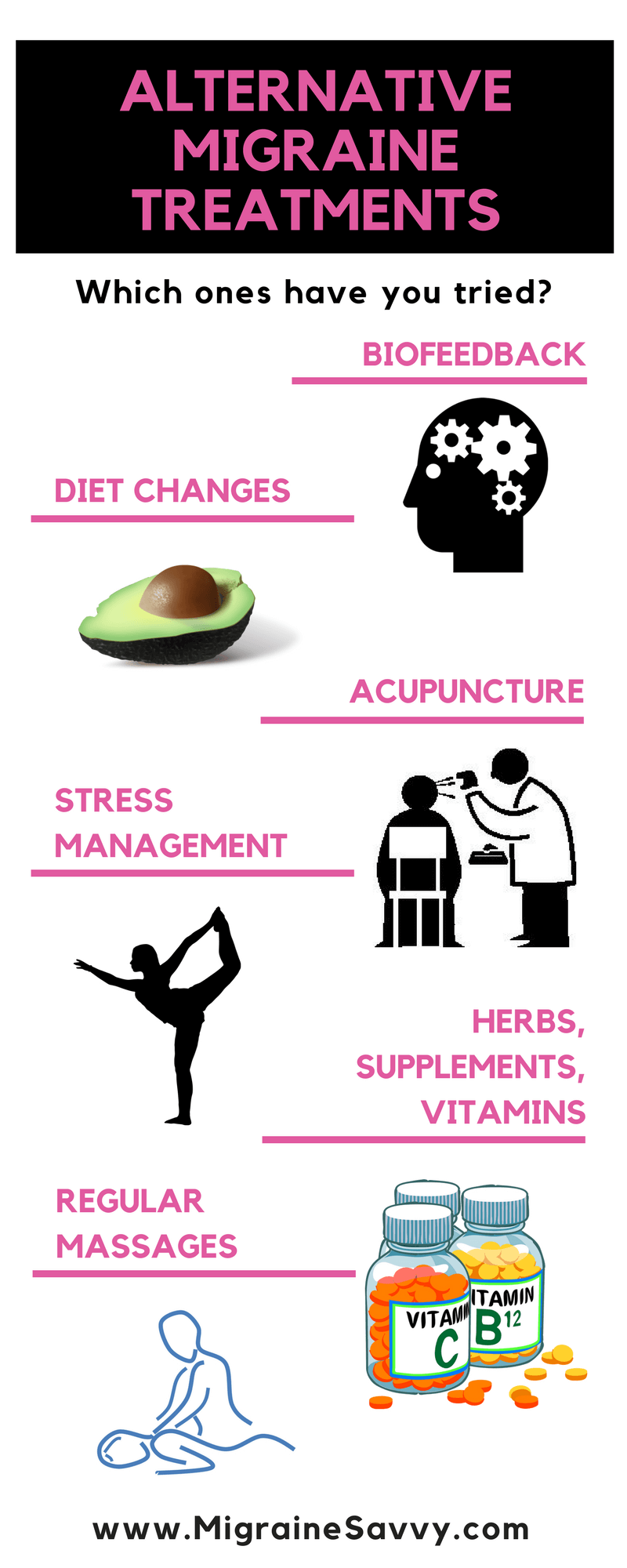 Eight evidence-based alternative treatments for migraine relief
Evidence-Informed Alternative Treatments That May Help
Not all alternatives are equal. The following options have research backing or consistent clinical use in migraine care.
1. Biofeedback & Neurofeedback
Biofeedback trains you to regulate physiological stress responses such as muscle tension, skin temperature, and heart rate.
Electrodes placed on the body provide real-time feedback, helping you learn to:
- Relax muscle tension
- Reduce stress reactivity
- Interrupt early migraine escalation
Multiple studies show biofeedback can reduce migraine frequency, particularly in chronic cases.
→ Read more: Biofeedback and Migraine

2. Acupuncture
Acupuncture has one of the strongest evidence bases among alternative treatments for migraines.
Research shows it may:
- Reduce attack frequency
- Lower intensity
- Produce effects lasting months after treatment
Mechanisms likely involve endorphin release, modulation of pain pathways, and changes in brain signaling.
Many people use acupuncture as part of long-term prevention rather than acute relief.
→ Learn more: Can Acupuncture for Migraines Stop Relentless Attacks?
→ Migraine Pressure Point Routine
→ Chinese Cure for Migraine Headache – Tips and Recipes
Note: Daith piercing is not acupuncture and is not formally supported by clinical trials.
3. Stress Regulation & Relaxation Therapy
Migraine is strongly influenced by nervous system reactivity. Chronic stress lowers threshold and increases susceptibility.
Evidence-based approaches include:
- Progressive muscle relaxation
- Breathing retraining
Studies consistently show combining stress therapy with medication improves outcomes more than medication alone.
This is not about “positive thinking.” It is about reducing physiological stress activation.
4. Targeted Diet Adjustments
For some individuals, dietary modification reduces recurrence. For others, food influences threshold more than acting as a direct trigger.
Structured experimentation may include:
- Identifying true food triggers
- Stabilizing blood sugar
- Reducing inflammatory load
Elimination diets should be temporary and structured, not lifelong restriction plans.
→ Foods to Prevent Migraine Headaches

5. Magnesium, B12 & Key Supplements
Certain supplements have moderate research support in migraine prevention.
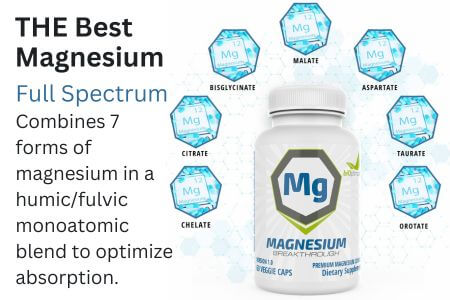
Magnesium
May help reduce frequency, particularly in those with deficiency or menstrual migraine patterns.
Riboflavin (B2)
Sometimes used in preventive protocols.
Feverfew & Butterbur
Have mixed evidence. Butterbur requires caution due to liver toxicity concerns unless properly purified.
Vitamin B12
In some individuals, deficiency correction improves neurological stability. My own migraine frequency reduced significantly after addressing B12 levels — but this should always be tested and supervised by a doctor.
→ The Top 6 Supplements for Migraine
→ Can Magnesium Help Migraines?
Supplements are not harmless. Always consult your provider before starting them.
My #1 Choice in Magnesium Supplementation
6. Massage & Manual Therapies
Massage reduces muscle tension in the neck, shoulders, and scalp — areas commonly tight in migraine.
While massage does not consistently reduce migraine frequency in clinical trials, many people find it:
- Reduces muscular overlay pain
- Improves relaxation
- Enhances recovery between attacks
Trigger point therapy may provide localized relief, though it is not a primary preventive strategy.
Manual therapies are best viewed as adjuncts rather than standalone solutions.
→ Trigger Point Therapy for Migraine Relief
7. Neuromodulation Devices
Non-invasive neuromodulation devices are increasingly used as alternatives or complements to medication.
Examples include:
- External trigeminal nerve stimulation
- Vagus nerve stimulation
- Remote electrical neuromodulation
Some are FDA-cleared and supported by clinical data.
They are particularly useful for individuals who:
- Cannot tolerate triptans
- Have contraindications
- Prefer non-drug options
These devices require proper evaluation and prescription in many cases.
→ Learn More: Cefaly, gammaCore, Nerivio
8. Cold Therapy (Ice for Acute Relief)
Cold application is one of the most widely used non-drug migraine treatments.
Applying ice to the head or neck may:
- Constrict superficial blood vessels
- Reduce inflammatory signaling
- Dull pain transmission
- Provide immediate comfort while medication takes effect
For many people, ice is a consistent part of every attack management plan.
It does not prevent migraine long-term — but it can significantly reduce pain during an episode.
→ The Best Ice Packs for Migraine Relief
→ How to Treat with Ice and Heat at the Same Time
Choosing the Right Alternative Treatment
Do not try all options at once.
Instead:
- Select one approach
- Track results over several weeks
- Evaluate frequency, intensity, and recovery
- Adjust strategically
Combining medication with targeted alternative treatments often produces better outcomes than either approach alone.
If you want a structured framework for testing these options without guessing, explore the Migraine Pain Management Course (first module free).
When Alternative Treatments Are Not Enough
Seek reassessment if:
- Attacks are increasing in frequency
- Headaches occur more than 15 days per month
- Medication overuse is suspected
- New neurological symptoms appear
Alternative treatment for migraines is most effective when integrated into a medically guided plan.
A Balanced Approach Works Best
Migraine management is layered:
- Acute medication when needed
- Preventive therapy if appropriate
- Stress regulation
- Nutritional stability
- Strategic complementary treatments
No single therapy carries the entire burden.
The goal is fewer attacks, shorter duration, and improved quality of life using credible methods that work for your specific pattern.
Read More: Alternative Treatment for Migraines
Acupuncture & Traditional Chinese Medicine
Supplements & Herbal Options
Behavioral & Nervous System Therapies
Manual & Physical Therapies
Device-Based & Immediate Relief Tools
Broader Complementary Options
Ready to take the next step?
Choose the next step that fits where you are right now.

CATEGORIES
Migraine Types
Symptoms
Migraine Causes
Migraine Triggers
Associated Migraine Conditions
Treatment Options
Prevention Strategies
Medications
Migraine Relief
Complementary Treatments
Migraine Help
Food & Diets
Recipes
Meditation
Your Migraine Stories
Patient Education on Migraine Headaches
MORE SUPPORT
Free Printable Downloads
Migraine Relief Secrets 5-Week eCourse
Free Migraine Pain Management Workshop
Free Module 1 - Migraine Pain Management Course
Free Brain Health Challenges
NEWSLETTER
Practical Tips & Tools for
migraine prevention
Get weekly updates.
CONTACT ME
contact-me@migrainesavvy.com
PRIVACY // TERMS & DISCLAIMERS // REFUND POLICY // AFFILIATE DISCLOSURE // ADVERTISE // CONTACT // SITEMAP // DONATE // SHOP
Medical Disclaimer: The information on MigraineSavvy.com is provided for educational purposes only and should not be used as a substitute for professional medical advice or psychological advice, diagnosis, or treatment. Always consult your healthcare provider before making any healthcare decisions. No content on this website establishes a doctor-patient relationship, and MigraineSavvy.com does not provide medical advice or assume any liability for how the information is used.
By using this website, you agree to the Terms of Use and Privacy Policy.
Copyright © 2010- MigraineSavvy.com. All rights reserved regardless of links or attributions. Content may not be reproduced in any form.

Powered by Solo Build It