- Home
- Alternative Treatments
- Supplements for Migraines
Best Supplements for Migraines for Prevention and Relief
Supplements for migraines are often used to help reduce attack frequency and support long-term migraine prevention. Some vitamins, minerals, and herbal remedies have shown promising results in research, particularly for people who have underlying nutritional deficiencies.
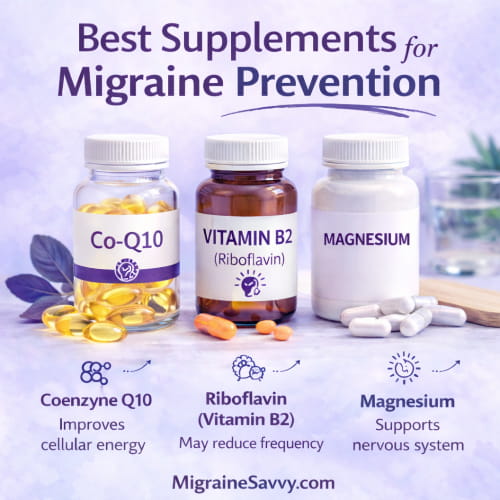
If you live with migraine, you already know there is no single solution that works for everyone. What works well for one person may have little effect for another.
Below, I’ll walk you through the most researched supplements for migraines, how they work, and how to approach them safely so you can decide what might be worth trying.
Quick Answer: Most Studied Supplements for Migraines
Research from the American Headache Society suggests the most studied supplements for migraines and migraine prevention include:
- Magnesium
- Riboflavin (Vitamin B2)
- Coenzyme Q10
- Butterbur
- Feverfew
These supplements may help reduce migraine frequency for some people, particularly when deficiencies are present, and are commonly recommended by neurologists as part of a broader migraine prevention strategy.
Common Dosages Used in Research
- Magnesium: 200–600 mg daily
- Riboflavin: 400 mg daily
- CoQ10: 100–300 mg daily
Key Supplements Used for Migraine Prevention: Comparison Table
This comparison table summarizes several of the most researched supplements for migraines and how they may support migraine prevention.
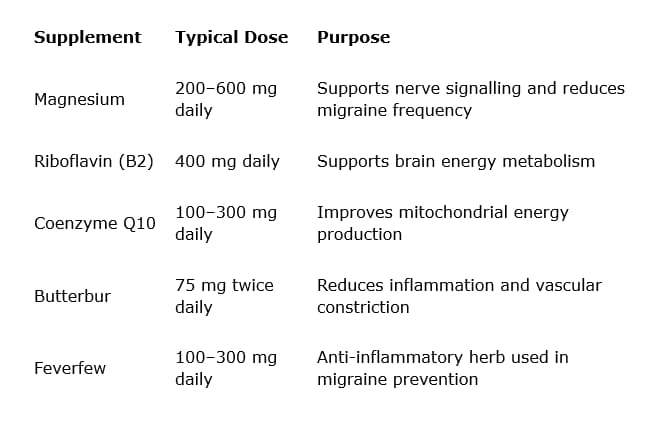 Comparison table of the most researched supplements for migraines and their typical doses used in prevention studies
Why Supplements May Help Migraine Prevention
Migraine is a complex neurological condition involving brain chemistry, inflammation, nerve signaling, and energy metabolism.
Recommended supplements target these pathways by supporting:
- mitochondrial energy production
- nerve signaling stability
- inflammation regulation
- blood vessel function
For some people, correcting a deficiency alone can reduce migraine frequency.
However, supplements usually work best as part of a broader migraine management strategy, not as a single solution.
 Top supplements for migraines including magnesium, riboflavin, and CoQ10 that may help reduce migraine frequency.
Magnesium
Magnesium is one of the most commonly recommended supplements for migraines, particularly for prevention. Many neurologists consider magnesium one of the first supplements for migraines to test because deficiency is common among people living with migraine disease.
It plays a critical role in nerve signaling, muscle function, and energy production inside brain cells.
Research suggests many people living with migraine may have lower magnesium levels than average.
Supplementation may help:
- calm overactive nerve signaling
- stabilize electrical brain activity
- reduce migraine frequency
Many neurologists recommend doses between 200–600 mg per day, depending on bowel tolerance.
However, the type of magnesium matters. Some forms are poorly absorbed and can cause digestive upset. If you want to learn which forms work best, read my full article here:
→ Which Magnesium Is Best for Migraines
You may also want to explore the research behind magnesium and migraine:
→ Can Magnesium Help With Migraine?
Intravenous (IV) Magnesium Treatments
On a personal note, I tried magnesium pushes for 18 months. It's slowly injected into your bloodstream to assist in stopping an acute migraine attack, if you have that option. It made me very hot and faint a few times. Afterwards, I felt significantly better energy wise, and my cognitive function felt sharp. I never caught a cold.


Riboflavin (Vitamin B2)
Riboflavin is one of the most widely recommended vitamins for migraine prevention.
It plays a key role in mitochondrial energy production.
Migraine has been linked to impaired energy metabolism in brain cells, which is why riboflavin may help some individuals.
Clinical studies commonly use doses of 400 mg per day
Some people also prefer the activated form: Riboflavin-5-Phosphate which may be easier for the body to use.
Vitamin B2 is also essential for activating and converting the other B vitamins. It is required for the activation of vitamin B6, the conversion of tryptophan to niacin, and the conversion of folate to its various active forms.
It is also essential for fat and glucose metabolism, red blood cell synthesis, and the production and regulation of certain hormones. This makes it one of the top supplements for migraines.
Dr. Mauskop, a leading headache doctor, recommends combining these four supplements for migraines for a more beneficial effect:
- 50 milligrams of feverfew,
- 200 milligrams of riboflavin (B2),
- 150 milligrams of coenzyme Q10 and
- 200 milligrams of magnesium, taken twice a day with food. [2]
As with any treatment regimen, you should consult with your healthcare provider before proceeding.
Co-enzyme Q10 (CoQ10)
Coenzyme Q10 is another nutrient involved in mitochondrial energy production.
Several studies have found that CoQ10 supplementation may reduce migraine frequency and severity in some patients.
Typical doses range from 100–300 mg per day taken consistently for several months.
CoQ10 also functions as an antioxidant, helping protect cells from oxidative stress.
→ See the CoQ10 supplement I recommend
Butterbur (Petasites hybridus)
Butterbur is a herbal extract that has shown promising results in migraine prevention studies.
One clinical trial found that taking 75 mg twice daily reduced migraine attacks significantly compared with placebo.
Butterbur appears to work by:
- reducing inflammation
- relaxing blood vessels
- stabilizing vascular responses
However, it is extremely important to use PA-free butterbur extracts. Unprocessed butterbur contains pyrrolizidine alkaloids (PAs), which can be harmful to the liver.
Notes From Holly's Helpful Tips: Butterbur Directions
Butterbur to prevent migraines:
75 mg twice a day
For an acute attack:
1. 100 mgs every 3 hours for the first 3 doses
2. Vitamin B2 400 mgs every morning
3. CoQ10 200 mgs
4. Magnesium Sulphate 200-400 mgs twice per day unless loose stools (reached bowel tolerance)
Butterbur maintenance:
50 mgs 1 - three times a day for one month;
And then 1 – twice a day for 18 months or longer if needed.
It's safe to take 2 every 3 hours up to 6 caps for acute migraine, but check the dose on the box first, as they vary. Use one of these brands for quality butterbur:
- Life Extension Migra-Eeze which is a combination of B2, Butterbur and Ginger
- Migravent which also has butterbur extract
Feverfew (Tanacetum parthenium)
Feverfew is another herbal supplement commonly used for migraine prevention.
Its active compound, parthenolide, may help reduce inflammation and prevent blood vessel constriction associated with migraine attacks. Make sure your supplement has been standardized for parthenolide content, as they are pretty much useless without it.
Typical doses range between 100–300 mg daily
Some clinicians recommend higher doses depending on the preparation.
Warning: Feverfew should be avoided during pregnancy and by individuals with ragweed allergies.
Alpha Lipoic Acid (ALA)
Alpha lipoic acid is a powerful antioxidant involved in glucose metabolism and cellular energy production.
Because blood sugar instability can trigger migraines in some people, alpha lipoic acid may help support metabolic balance.
It may also support nerve health and reduce oxidative stress.
Other Supplements Sometimes Used for Migraine Prevention
Other supplements sometimes explored for migraine support include:
- Vitamin D
- Vitamin C
- Probiotics
- Turmeric
- Taurine
- Inositol
- Quercetin
Scientific evidence for these options is less consistent, but they may support overall neurological health and inflammation regulation.
→ Digestion Problems and Migraine: Gut Brain Link Explained
Vitamin Deficiencies and Migraine
Research from Cincinnati Children’s Hospital found that many people with migraine may have deficiencies in nutrients such as:
- Vitamin B2
- Vitamin D
- Coenzyme Q10
However, studies evaluating supplementation have produced mixed results. This suggests that supplements may work best when a true deficiency exists.
If possible, testing through your healthcare provider can help determine whether any nutrient levels need support before starting supplementation.
Specific Deficiencies That May Contribute to Migraine
While supplements are often used for migraine prevention, an underlying vitamin deficiency may also contribute to attack frequency.
Several nutrients play important roles in brain energy metabolism, nerve signaling, and inflammation regulation — all processes involved in migraine disease. When levels of these nutrients are low, some individuals may experience more frequent or severe migraine attacks.
Some of the vitamins most commonly studied in migraine research include:
Vitamin B2 (Riboflavin)
Riboflavin plays an important role in mitochondrial energy production. Because migraine has been linked to impaired energy metabolism in brain cells, riboflavin supplementation has been widely studied for migraine prevention.
Vitamin D
Low vitamin D levels have been associated with increased migraine frequency in some observational studies. While results are mixed, correcting a deficiency may help support overall neurological health.
Vitamin B12
Vitamin B12 is essential for nerve function and neurological health. Deficiency can contribute to fatigue, nerve dysfunction, and neurological symptoms that may worsen migraine patterns for some individuals.
Folate (Vitamin B9)
Folate helps regulate homocysteine levels, which have been linked to migraine in certain genetic profiles. Adequate folate intake may support vascular and neurological health.
If you suspect a deficiency may be contributing to your migraine attacks, speak with your healthcare provider about testing your vitamin levels before beginning supplementation.
Correcting a deficiency will not eliminate migraine for everyone, but it can be an important part of a broader prevention strategy.
If supplements alone are not enough, you may want to review the full list of migraine medications available for both acute treatment and prevention.
→ List of Migraine Medications
Track Your Migraine Supplement Experiments
If you're experimenting with supplements for migraines, one of the most helpful things you can do is track your results.
My 8-Week Migraine Food & Supplement Journal helps you record:
- supplements you test
- dosage changes
- migraine patterns
- symptom triggers
Tracking this information makes it much easier to identify what is helping and what is not.
→ See how the 8-Week Journal works
Supplements for Migraines FAQ
How long do supplements take to work?
How long do supplements take to work?
Answer - Most supplements require 6–12 weeks of consistent use before benefits become noticeable.
Can supplements stop a migraine attack?
Can supplements stop a migraine attack?
Answer - Most supplements for migraines are used for prevention, not acute migraine relief. Prescription medications such as triptans are typically used to stop an active migraine attack.
Can you combine migraine supplements?
Can you combine migraine supplements?
Answer - Some neurologists recommend combining magnesium, riboflavin, and coenzyme Q10 for migraine prevention. However you should always consult your healthcare provider before combining supplements to avoid interactions.
Final Thoughts
Supplements for migraines can be a helpful part of prevention for some people. And for many of us they become one piece of a broader long-term migraine management strategy.
However, migraine is a complex neurological disorder, and most people benefit from a combination of strategies including medication, diet, sleep regulation, and trigger management.
If you decide to try supplements, start slowly, track your response carefully, and work with your healthcare provider to ensure safety and proper dosing.
This is a complex neurological medical condition and the supplements for migraines, herbs, alternative treatments, and medications you choose to use should not be taken without checking for contraindications or drug interactions.
Ready to take the next step?
Choose the next step that fits where you are right now.



ALTERNATIVE MIGRAINE TREATMENTS Related Articles



Supplements for Migraines References:
1. Sun-Edelstein C, Mauskop A. Alternative headache treatments: nutraceuticals, behavioral and physical treatments. Headache. 2011. Vol. Mar;51(3):469-83. Review. PubMed.
2. Sun-Edelstein C, Mauskop A. Foods and supplements in the management of migraine headaches. Clinical Journal of Pain. 2009. Vol. Jun;25(5):446-52. Review. PubMed.
3. Stafford D, Shoquist J. Migraines for Dummies. Wiley Publishing.


CATEGORIES
Migraine Types
Symptoms
Migraine Causes
Migraine Triggers
Associated Migraine Conditions
Treatment Options
Prevention Strategies
Medications
Migraine Relief
Complementary Treatments
Migraine Help
Food & Diets
Recipes
Meditation
Your Migraine Stories
Patient Education on Migraine Headaches
MORE SUPPORT
Free Printable Downloads
Migraine Relief Secrets 5-Week eCourse
Free Migraine Pain Management Workshop
Free Module 1 - Migraine Pain Management Course
Free Brain Health Challenges
NEWSLETTER
Practical Tips & Tools for
migraine prevention
Get weekly updates.
CONTACT ME
contact-me@migrainesavvy.com
PRIVACY // TERMS & DISCLAIMERS // REFUND POLICY // AFFILIATE DISCLOSURE // ADVERTISE // CONTACT // SITEMAP // DONATE // SHOP
Medical Disclaimer: The information on MigraineSavvy.com is provided for educational purposes only and should not be used as a substitute for professional medical advice or psychological advice, diagnosis, or treatment. Always consult your healthcare provider before making any healthcare decisions. No content on this website establishes a doctor-patient relationship, and MigraineSavvy.com does not provide medical advice or assume any liability for how the information is used.
By using this website, you agree to the Terms of Use and Privacy Policy.
Copyright © 2010- MigraineSavvy.com. All rights reserved regardless of links or attributions. Content may not be reproduced in any form.

Powered by Solo Build It