- Home
- Migraine Help
- Help for Migraines
Help for Migraines: 11 Steps to Build Your Prevention Tool Kit
If you're looking for help for migraines, one of the most effective things you can do is build your own prevention and relief toolkit. Below you'll find 11 practical steps, printable forms, and strategies to help you navigate migraine prevention, treatment, and long-term pain management.
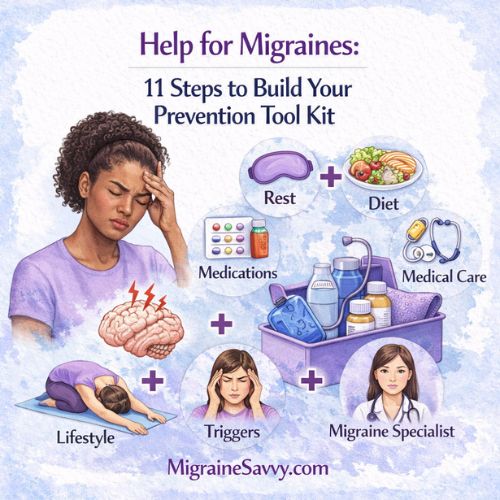 11 Steps to help you build your own migraine prevention tool kit so you can feel more in control and supported each day
I still use the tools on this page! I use my monthly calendar to make notes of any changes. If I change supplements, medications, or try anything new... that gets written down.
I always record the time and date I take my abortive medication so I can see exactly what works and avoid medication overuse.
This reduces pre-migraine anxiety and helps me manage attacks more effectively, especially during the long migraine cycles I sometimes experience.
Life is not what it's supposed to be. It is what it is. The way you cope with it is what makes the difference.
~ by Virginia Satir
Your Help for Migraines Tool Kit - 11 Steps to Effective Pain Management
Many people searching for help for migraines find that combining several small strategies creates the most effective long-term relief plan.
The migraine toolkit below combines medical treatment, lifestyle changes, and self-management strategies recommended by headache specialists.
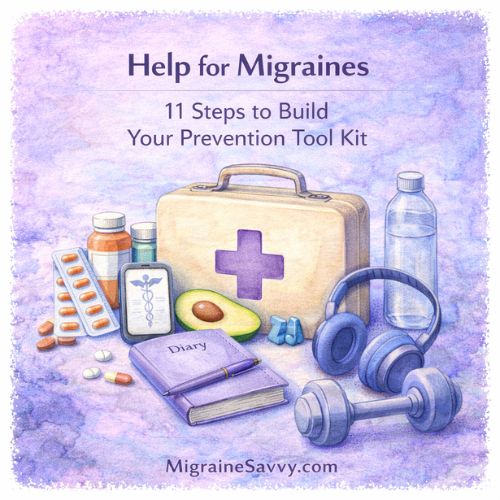 Key migraine management strategies such as rest, diet, medications, lifestyle adjustments, trigger awareness, and support from a migraine specialist
Step 1: Keep Detailed Migraine Records
The number one help for migraines is to keep good records.
Keep a migraine diary, migraine journal and monthly migraine calendar.
Many sources show that keeping a journal is helpful to rid yourself of extreme emotions. But you need one to help identify triggers and patterns too.
The monthly calendar is both for you and your doctors to help decipher your migraine pattern, should they have one. Join the mailing list to get a free copy of the one I use.
My course has a very detailed daily diary, with codes to help identify patterns in your symptoms and triggers. It also has a monthly diary to help you summarize an overall snapshot for your doctor. Click here for my course.
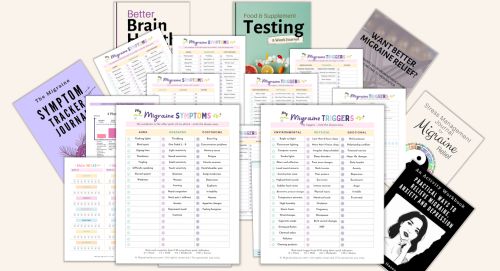
This is an essential tool for your detective work to help identify what works and what doesn't. Here are some freebies you can use:
Step 2: Understand Your Migraine Medications
Know what medications to take for migraine.
Review this list of migraine medications for acute medications and the designer migraine medications called triptans.
Find out what other alternatives are available in the way of natural relief options.
If you cannot find natural relief, you may need to consider medications and the most effective migraine abortives made today is in the family of triptan drugs.
It is an option you should consider, even if you refuse to take meds, like I did initially.
It's better to be safe and work through what might be most effective for you just in case you change your mind in the intense pain phase and you need some fast, effective pain relief.
Did I mention you'll need it FAST?
Step 3: Consider Preventive Treatments
Find out if you need preventive medications too.
Using prescribed and targeted migraine prevention medications is another option for you if you find your pattern to be chronic.
Regular occurrence of migraines may be best treated with a prophylactic medication.
Find out if there are other effective alternatives, like Feverfew or Butterbur, that might be worth trying for prevention. For me it was B12 that made a huge difference.
→ Supplements for Migraine Relief and Prevention
Step 4: Improve Your Lifestyle Habits
Learn about living a more healthy lifestyle.
Make healthy lifestyle choices... this is up to you.
It is up to you to choose a more healthy lifestyle in order to help the body deal with these assaults.
Educate yourself on what healthy looks like (for you) and experiment to see what will help you move forward to create every opportunity to minimize the chance of migraine attacks.
Step 5: Work Closely with Your Doctor
Work closely with your doctor.
Having your doctor write up a detailed medication treatment plan is imperative to gaining some degree of control over your migraine episodes and shortening their duration.
There are a number of forms in this article to print. It should be up at number one. See your doctor at first sign of pain ... yes! But, you know that bit.
Here's my favorite one - the medication treatment plan for your doctor to use with you in the office.
Details, details, details. SO important.
Plus, you need to get the right diagnosis so you know what and how to deal with your headaches or your medical condition, or if it's something else entirely.
Step 6: Develop Your Migraine Safe Diet
Learn your food triggers.
Avoiding whatever food triggers you have by controlling your diet will greatly improve your chances of avoiding another attack. Try this → Migraine Elimination Diet.
For some, this might be the easiest help for migraines they find. For others, like me, not so easy.
Tracking your food, supplements, and migraine symptoms can make it much easier to identify patterns.
That’s why I created the 8-Week Food & Supplement Testing Journal — a guided system with weekly prompts that build on each other, using beneficial foods, supplements and other fun changes that helps you test, track and monitor migraine symptoms while you test potential triggers.
→ Look inside the 8-Week Food & Supplement testing plan
Step 7: Learn Stress Reduction Techniques
Walk, Yoga, Tai Chi, Qigong...
Relaxation and Biofeedback therapies are proven to reduce the amount of stress created by your mind and anxiety caused during the on coming onslaught of migraine.
A body scan or meditation for migraine pain management, if not too intense, is perfect to acknowledge the pain and watch it shift. If you can manage that.
A guided mindfulness meditation for migraine is much more gentle. I love all of these, I listen for about a year or two and then I find a new one.
I've done a meditation course too, here's the link...

It is so important to learn to calm ourselves down with an impending attack, and all during the stages. Learning to calm your nervous system during the early stages of a migraine attack can make a meaningful difference in how the attack unfolds.
Step 8: Strengthen Your Mental Coping Strategies
You can do this... have you heard of neuroplasticity? It has been proven that our brains can change with little effort.
Cognitive Behavior Modification (CBT) - has also been proven to help integrate a more realistic thought process around regular migraine attacks and the destruction they cause.
Positive Affirmations for Migraines
are also proven to create a more positive thought process for the mind to follow instead of negative anxiety ridden thoughts.
Step 9: Educate Yourself About Migraine
Educate yourself on your specific diagnosis.
Knowing about migraine medications and effective prevention strategies are essential.
If you can, watch The Migraine World Summit - it streams for free each year for one week in March. You will be able to soak up expert advice in just hours. FOR FREE! Or there's an option to purchase it any time during the year.
The interviews provide practical advice from leading neurologists and headache specialists who treat migraine every day. I've written all about some insights here → Migraine World Summit Highlights and different topics are sprinkled throughout my website.
→ Watch the Migraine World Summit
→ Patient Education on Migraine Headaches

Step 10: Build a Support Network
Form a solid team of professionals to support you.
Know who to ask for help and when. Plan ahead for this, ask your doctor, call a local migraine awareness group, or contact a local community center with a counseling service if you do not already have a support system set up around your migraine attacks.
If they are
occurring regularly, getting help for migraines is essential. I have a step-by-step section in my course to help you with this.
Step 11: Use Exercise to Support Migraine Prevention
Get regular, consistent exercise. Consistency over intensity wins every time.
Include exercises that work the areas that get tense from having lots of migraine attacks.
This article → Easy Migraine Headache Neck Pain Stretches are a main part of my week.
Exercise can act like a painkiller and is considered great help for migraines by most experts.
In my meditation course, I've recorded a Qigong Master doing a routine to release head, neck and shoulders... it's fantastic. Very specific help for migraines.
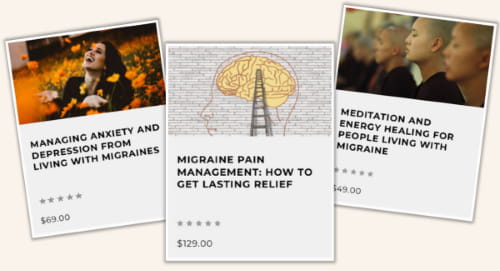
→ Meditation and Energy Healing for People Living with Migraine
Ready to take the next step?
Choose the next step that fits where you are right now.
MIGRAINE HELP Related Articles



Additional Migraine Resources
1. Society for Women’s Health Research – Migraine Patient Toolkit → https://swhr.org
2. American Migraine Foundation → https://americanmigrainefoundation.org
3. The Migraine World Summit – Expert interviews with leading neurologists → https://www.migrainesavvy.com/summit

CATEGORIES
Migraine Types
Symptoms
Migraine Causes
Migraine Triggers
Associated Migraine Conditions
Treatment Options
Prevention Strategies
Medications
Migraine Relief
Complementary Treatments
Migraine Help
Food & Diets
Recipes
Meditation
Your Migraine Stories
Patient Education on Migraine Headaches
MORE SUPPORT
Free Printable Downloads
Migraine Relief Secrets 5-Week eCourse
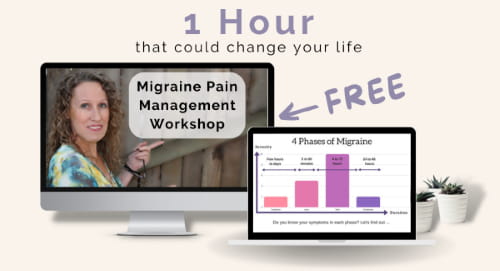
Free Migraine Pain Management Workshop
Free Module 1 - Migraine Pain Management Course
Free Brain Health Challenges
NEWSLETTER
Practical Tips & Tools for
migraine prevention
Get weekly updates.
CONTACT ME
contact-me@migrainesavvy.com
PRIVACY // TERMS & DISCLAIMERS // REFUND POLICY // AFFILIATE DISCLOSURE // ADVERTISE // CONTACT // SITEMAP // DONATE // SHOP
Medical Disclaimer: The information on MigraineSavvy.com is provided for educational purposes only and should not be used as a substitute for professional medical advice or psychological advice, diagnosis, or treatment. Always consult your healthcare provider before making any healthcare decisions. No content on this website establishes a doctor-patient relationship, and MigraineSavvy.com does not provide medical advice or assume any liability for how the information is used.
By using this website, you agree to the Terms of Use and Privacy Policy.
Copyright © 2010- MigraineSavvy.com. All rights reserved regardless of links or attributions. Content may not be reproduced in any form.

Powered by Solo Build It