- Home
- Alternative Treatments
- Daith Piercing for Migraines
Daith Piercing for Migraines: Does It Work or Is It Just a Placebo?
I’ll be upfront with you, I’m skeptical about daith piercing for migraines.
If you’re here, you’re probably wondering the same thing I did: Can something as simple as an ear piercing really stop migraine attacks?
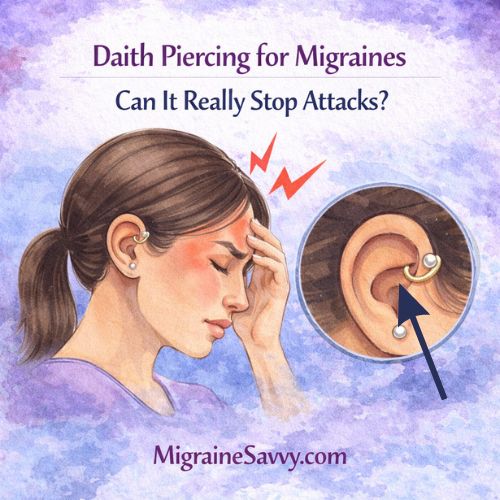 Daith piercing placement and its proposed link to migraine relief
Right now, there’s no strong scientific evidence that daith piercing prevents migraines. Some people report relief, but results are inconsistent and may be influenced by placebo or short-term effects.
That doesn’t mean you should dismiss it completely, but it does mean you need to approach it with realistic expectations.
Let’s walk through what we actually know so you can decide what’s right for you.
Quick Answer: Does Daith Piercing Help Migraines?
If you just want the short version:
- There is no strong clinical evidence supporting it
- Some people report reduced symptoms
- Results are inconsistent
- Any benefit may be temporary
- It is not considered a proven migraine treatment
If you’re looking for something reliable, you’ll want to focus on approaches that have stronger research behind them.
Is There Any Science Behind Daith Piercing for Migraines?
Daith piercing is a cartilage piercing through the innermost fold of the ear.
Some proponents suggest it may help by stimulating the vagus nerve, which plays a role in pain regulation and the nervous system. Others compare it to auricular acupuncture, which targets specific points on the ear.
But here’s where things become important.
Daith piercing does not line up with established acupuncture points used for migraine treatment. Even within traditional Chinese medicine, it isn’t recognized as a migraine-specific point.
So while the theory sounds appealing, it doesn’t hold up well under closer examination.
If you’re interested in this area, you may want to explore a more targeted approach like acupuncture for migraine relief, which has been studied more extensively.
Out of the 1,120 points in the ears, daith piercing doesn’t coincide with a single point that’s commonly used to treat migraine with acupuncture. (See large image.)
What Research Says About Daith Piercing for Migraines
At this point, there are no large-scale, high-quality clinical trials confirming that daith piercing is an effective migraine treatment.
Most of the available information comes from:
- small surveys
- case reports
- anecdotal experiences
One informal survey found that around 35% of people reported improvement. However, this is not considered strong evidence, and results could be influenced by expectation or placebo effects.
Some reports suggest there may be short-term benefits for certain individuals, but these findings haven’t been confirmed in controlled studies.
This is why most medical professionals remain cautious when discussing daith piercing as a treatment option.
Real Results: Does Daith Piercing Help Migraines?
When you look at real-world experiences, the results are mixed.
Some people report noticeable improvements, including fewer attacks or reduced severity. Others see no change at all, or even feel worse.
A larger informal dataset suggested:
- around 40–50% reported some reduction in symptoms
- about 20% reported significant improvement
- a smaller group reported complete remission
At first glance, that might sound promising.
But here’s the key point: these results are not from controlled clinical trials, and outcomes often decline over time.
So while early results may look encouraging, they don’t provide reliable long-term evidence.
Survey Results: Real People’s Experiences with Daith Piercing
If you like looking at the numbers more closely, here’s a deeper breakdown. (P.S. If you're on your phone, turn this sideways to see the chart properly):
Results
Increased Pain + Symptoms
No Change
Reduced Attacks
No Further Attacks
Severity Improvement
9%
24%
49%
18%
Frequency Improvement
7%
28%
44%
20%
Migraine frequency was also recorded, with:
- 5% seeing an increase in attacks
- 31% reducing attacks by half, or more than half
- 18% seeing a full remission
A standout point is that 18-20% eliminated their attacks and 44-49% reduced them.
This study suggests daith piercing may influence symptoms initially for some people. And it appears to have worked for a good proportion of the participants, and some reports suggest there may be longer-term benefits for some people, but this hasn’t been confirmed in high-quality clinical studies. I'd still err on the side of caution and implement a more robust, clinically proven treatment program for your long-term migraine management plan.
The long-term statistics after 2 years decline. So, the more recent the piercing, the better the results. This is important.
Another larger study was run by the London Migraine Clinic under Dr. Chris Blatchley. Their findings were that the effects of daith piercing appeared to be quite resilient in that 60% after one year had no drop-off effect. They did find that it did not work in approximately 15% of migraine patients. Here are their details - Migraine Piercing London. [1]
Pros and Cons of Daith Piercing for Migraine Relief
Based on what we currently know, here’s a balanced view.
Daith Piercing Locations
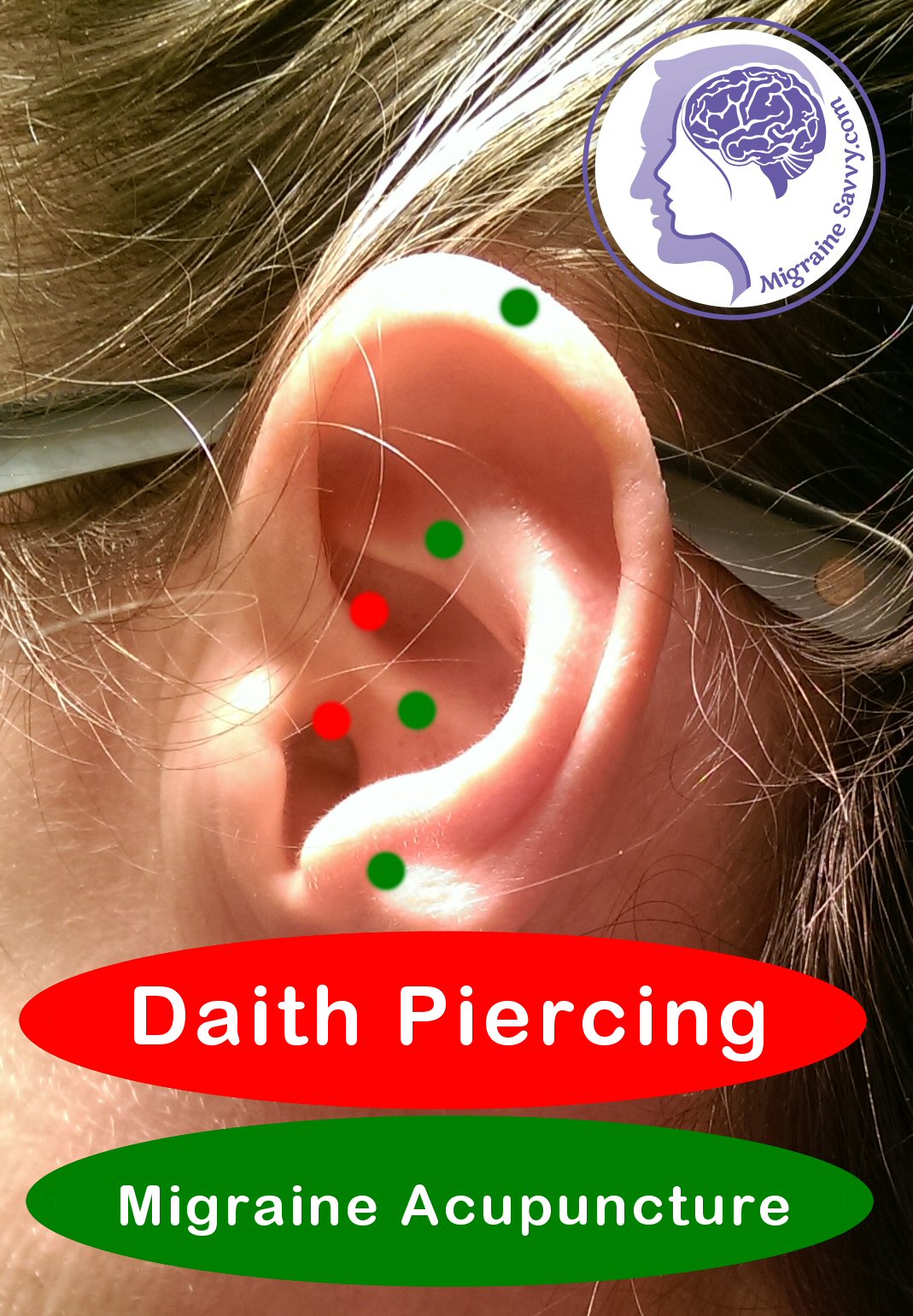
Pros
- Relatively affordable compared to many medical treatments
- Less invasive than procedures like nerve blocks
- Some people report symptom improvement
- It may offer a psychological sense of control
Cons
- No proven link to migraine-specific treatment points
- Risk of infection, especially with cartilage piercings
- Long healing time (often 6–9 months)
- Results are unpredictable
- It may not work or could potentially worsen symptoms
For most people, the biggest issue is not risk - it’s uncertainty.
Expert Insights: Medical vs. Holistic Views
Most neurologists and migraine specialists do not recommend daith piercing due to the lack of strong scientific evidence.
They typically suggest focusing on:
- preventive medications
- lifestyle adjustments
- evidence-based therapies
Some holistic practitioners are more open to it, viewing it as a form of auriculotherapy.
However, even within that space, many agree that any benefit is likely temporary rather than a long-term solution.
If you’re exploring natural options, you may also want to look at evidence-based alternative treatments for migraines that have more consistent support.
Practical Tips: Safety, Risks, and Aftercare
If you’re considering a daith piercing, safety matters.
Here are a few practical guidelines:
- Choose a Reputable, Experienced Piercer: Look for a professional piercing studio with high ratings and a clean environment. A skilled piercer will reduce the risk of complications.
- Follow Aftercare Instructions Carefully:
Clean the piercing twice daily with a saline solution to minimize infection risks.
Avoid touching or twisting the jewelry, which can slow the healing process. - Expect a Long Healing Period: Cartilage piercings can take anywhere from 6–9 months to heal completely. During this time, keep the area clean, avoid swimming in public pools, and minimize exposure to bacteria.
- Consult Your Doctor: Speak to your healthcare provider before getting the piercing, especially if you’re prone to infections or have other health concerns.
Alternatives to Daith Piercing for Migraines
If your goal is real, lasting migraine relief, there are more reliable options to consider.
Some of the most effective approaches include:
These approaches are supported by stronger research and tend to produce more consistent results over time.
This toolkit may be helpful too → Migraine Prevention Toolkit
Should You Try a Daith Piercing for Migraines?
If you like the idea of the piercing itself and understand the risks, it may be something you choose to try.
But it’s important to go in with clear expectations.
- It is not a proven treatment
- It should not replace medical care
- Results are unpredictable
If you do try it, think of it as a complementary approach, not a solution.
What This Means for You
When it comes to daith piercing for migraines, the reality sits somewhere between hope and hype.
Some people do report benefits. Others don’t. And right now, the evidence simply isn’t strong enough to support it as a reliable treatment.
If you’re looking for real, lasting improvement, your best results will usually come from a more structured, evidence-based approach that helps you understand your own triggers and patterns.
That’s where I’d start.
If you’re trying to figure out what actually helps your migraines, I’ve created something simple you can start using right away.
Download your free migraine bullet journal here → Migraine Bullet Journal
It helps you track triggers, patterns, and what’s working - so you can make clearer, more confident decisions about your care.
If you want to go a step further, you can also explore my migraine trigger trackers here → Migraine Trigger Trackers
Ready to take the next step?
Choose the next step that fits where you are right now.



ALTERNATIVE MIGRAINE TREATMENTS Related Articles




References:
1. Migraine Pal (2016) Daith Piercing Evidence for Migraine. Available [online] at: https://migrainepal.com/daith-piercing-evidence-for-migraine/
2. Howard, J and Serejski, E. (2019) The Daith piercing as a possible layman’s treatment option for those who suffer from headaches and migraine headaches. Available [online] at: https://www.battlefieldacupuncture.net/daithpiercing/
3. Horner-Warren, K. (2015) No, Getting Your Ear Pierced Won't Cure Your Migraines. Available [online] at: https://www.liveoakacupuncture.com/can-getting-your-ear-pierced-really-cure-migraine-headaches/
4. Migraine Piercing London (2019) Available [online] at: https://daith.co.uk/
5. Rizzo, A. et al. (2017) Daith Piercing in Chronic Migraine: A Possible Vagal Modulation. Frontiers in Neurology 2017 Nov 27;8:624. doi: 10.3389/fneur.2017.00624.
I want to walk you through this a little more. There's a little history you may not know.
Surprisingly, daith piercing for migraines became a ‘thing’ when a mention from one person on social media went viral. For a long time after that, every article that was written about daith piercing was based on that one original social media source. Hardly a very comprehensive piece of research, and it didn’t inspire me with confidence in the validity of the claims.
Years ago, the folks at Migraine Pal did a small, informal study of 1,107 participants that produced results that suggested that daith piercing for migraines may have the potential to produce beneficial effects in the early months after the initial piercing.
The results after 2.5 years were that half of the 1,170 participants experienced some kind of improvement. More specifically for migraine severity, of that: