Common Migraine Triggers: The Top Triggers to Watch For
Understanding the most common migraine triggers can help you narrow down what might be contributing to your attacks.
Migraine triggers can feel frustratingly unpredictable. What causes an attack for one person may have no effect on someone else. Still, research and clinical experience show that certain triggers appear again and again among people living with migraine.
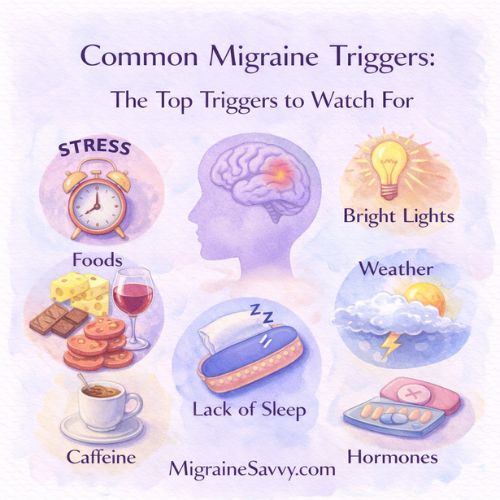 Common migraine triggers to watch for including stress, foods, caffeine, sleep changes, weather, and hormones
Some triggers are relatively easy to avoid, while others — like hormones, weather changes, or sleep disruption — can be much harder to control.
Below we’ll explore the most commonly reported migraine triggers and how you can start identifying the ones that affect you personally.
How Common Migraine Triggers Work
Migraine is a neurological condition involving complex changes in brain chemistry, nerve signaling, and blood vessel regulation.
Triggers do not “cause” migraine disease itself. Instead, they lower the brain’s threshold, making it easier for an attack to begin.
Many different factors can contribute to this process, including:
- food and dietary ingredients
- caffeine or alcohol intake
- stress or emotional changes
- sleep disruption
- dehydration
- environmental stimuli such as smells or smoke
For many people, migraine attacks occur when multiple triggers combine together, rather than from a single trigger alone.
The Top 10 Common Migraine Triggers
Headache specialist Dr. David Buchholz identified several common food triggers that frequently appear in migraine patients.
From my own research and experience working with migraine sufferers, these triggers appear often enough that they are worth testing first.
1. Caffeine
Caffeine is one of the most complex migraine triggers.
For some people caffeine can help stop a migraine when taken early. For others it can trigger attacks — especially if intake fluctuates.
Common sources include:
- coffee
- tea
- cola
- energy drinks
Sudden caffeine withdrawal can also trigger headaches.
2. Chocolate
Chocolate contains small amounts of compounds that influence neurotransmitters in the brain. Some people find chocolate reliably triggers migraine attacks, while others tolerate it without problems.
3. Nuts
Some migraine sufferers report attacks triggered by nuts or nut butters. Walnuts appear most often in trigger reports, although reactions vary widely.
4. Monosodium Glutamate (MSG)
MSG is a flavor enhancer used in many processed foods and restaurant meals.
It can appear in ingredient lists under several different names including:
- hydrolyzed vegetable protein
- yeast extract
- textured protein
Reading labels carefully can help you avoid hidden sources.
→ Click here to read all the hidden names for MSG.
5. Nitrates and Nitrites
These preservatives are often found in processed meats such as:
- deli meats
- hot dogs
- bacon
- smoked meats
They are commonly reported migraine triggers.
6. Aged Dairy Products
Certain cheeses contain compounds such as tyramine that may trigger migraine in sensitive individuals.
Aged cheeses are more likely to cause problems than fresh cheeses.
7. Alcohol
Alcohol is one of the most frequently reported migraine triggers.
Red wine appears particularly problematic for many people due to compounds such as tannins and sulfites.
→ You can read more about this here: Another Migraine Food Trigger: Tannins
8. Certain Fruits and Vegetables
Some fruits and vegetables occasionally reported as migraine triggers include:
- citrus fruits and juices
- bananas
- dried fruit like raisins
- avocados
- onions
These foods are not triggers for everyone but may be worth testing if you suspect a pattern.
9. Yeast and Freshly Baked Goods
Some people report migraine attacks triggered by yeast-containing foods, particularly freshly baked breads or sourdough products.
10. Artificial Sweeteners
Artificial sweeteners such as aspartame are sometimes reported as migraine triggers.
Because they are commonly found in diet drinks and processed foods, reducing or eliminating them may help some individuals.
Hidden Ingredients That Can Trigger Migraine
Many migraine triggers are not obvious at first glance. Certain ingredients can appear under multiple names on food labels.
For example, MSG may appear as:
- glutamic acid
- yeast extract
- hydrolyzed protein
- sodium caseinate
If you suspect MSG sensitivity, learning these hidden names can make avoiding it easier.
MSG Hidden Names Table
MSG is a common migraine trigger, if you suspect it, watch for these names and numbers on food labels.
"Names of ingredients that always contain MSG or processed free glutamic acid. [2]
- Glutamic Acid (E 620)
- Glutamate (E 620)
- Monosodium Glutamate (E 621)
- Monopotassium Glutamate (E 622)
- Calcium Glutamate (E 623)
- Monoammonium Glutamate (E 624)
- Magnesium Glutamate (E 625)
- Natrium Glutamate
- Anything "hydrolyzed"
- Any "hydrolyzed protein"
- Calcium Caseinate
- Sodium Caseinate
- Yeast Extract
- Yeast Food
- Yeast Nutrient
- Autolyzed Yeast
- Gelatin
- Textured Protein
- Soy Protein, Isolate or Concentrate
- Whey Protein, Isolate or Concentrate
- Anything... "protein" or "protein fortified" [2]
- there are more....
Why Food Triggers Vary Between People
One of the most confusing aspects of migraine is that triggers vary so widely between individuals.
A food that reliably triggers attacks for one person may be completely harmless for someone else.
Possible reasons include:
- genetic differences
- gut microbiome differences
- histamine sensitivity
- differences in metabolism
Because of this variability, identifying personal triggers usually requires careful observation and experimentation.
Tracking your food, supplements, and migraine symptoms can make it much easier to identify patterns.
That’s why I created the 8-Week Food & Supplement Testing Journal — a guided system with weekly prompts that build on each other, using beneficial foods, supplements and other fun changes that helps you test, track and monitor migraine symptoms while you test potential triggers.
→ Look inside the 8-Week Food & Supplement testing plan


How to Identify Your Personal Migraine Triggers
How to Identify Your Personal Migraine Triggers
The most reliable way to identify triggers is through systematic tracking.
Many people find it helpful to:
- record meals and snacks
- track sleep patterns
- observe early warning signs
Over time this information can reveal patterns between triggers and attacks.
You can also explore a structured approach here:
Pinpoint Your Migraine Triggers More Clearly
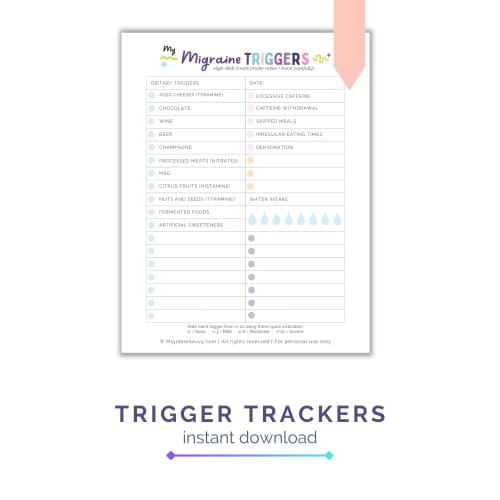
Migraine Triggers Tracker
If you are struggling to understand what triggers your migraine attacks, simple tracking can make a huge difference. Many attacks are caused by a combination of factors that build over time, which makes them difficult to recognize without writing things down.
Using a focused migraine trigger tracker helps you start connecting daily patterns with migraine symptoms so you can gradually identify what may be contributing to your attacks.
My migraine trigger tracker can help you:
- notice possible trigger combinations
- recognize patterns in your migraine cycle
- see how treatments or lifestyle changes affect your attacks
- create clearer records to discuss with your doctor
If you want a simple way to begin understanding your migraine patterns, structured trigger tracking is a powerful place to start.
→ Start identifying your migraine triggers
Final Thoughts
While lists of common migraine triggers can be helpful, they are only a starting point.
Migraine triggers are highly individual, and the most important step is identifying the specific factors that influence your own attacks.
With careful observation, tracking, and experimentation, many people living with migraine can gradually build strategies that reduce the frequency and severity of attacks.
Ready to take the next step?
Choose the next step that fits where you are right now.


MIGRAINE TRIGGERS Related Articles




CATEGORIES
Migraine Types
Symptoms
Migraine Causes
Migraine Triggers
Associated Migraine Conditions
Treatment Options
Prevention Strategies
Medications
Migraine Relief
Complementary Treatments
Migraine Help
Food & Diets
Recipes
Meditation
Your Migraine Stories
Patient Education on Migraine Headaches
MORE SUPPORT
Free Printable Downloads
Migraine Relief Secrets 5-Week eCourse
Free Migraine Pain Management Workshop
Free Module 1 - Migraine Pain Management Course
Free Brain Health Challenges
NEWSLETTER
Practical Tips & Tools for
migraine prevention
Get weekly updates.
CONTACT ME
contact-me@migrainesavvy.com
PRIVACY // TERMS & DISCLAIMERS // REFUND POLICY // AFFILIATE DISCLOSURE // ADVERTISE // CONTACT // SITEMAP // DONATE // SHOP
Medical Disclaimer: The information on MigraineSavvy.com is provided for educational purposes only and should not be used as a substitute for professional medical advice or psychological advice, diagnosis, or treatment. Always consult your healthcare provider before making any healthcare decisions. No content on this website establishes a doctor-patient relationship, and MigraineSavvy.com does not provide medical advice or assume any liability for how the information is used.
By using this website, you agree to the Terms of Use and Privacy Policy.
Copyright © 2010- MigraineSavvy.com. All rights reserved regardless of links or attributions. Content may not be reproduced in any form.

Powered by Solo Build It