- Home
- Food & Diets
- Migraine Headaches Nutrition
Migraine Headaches Nutrition: Vitamins, Minerals, and Hydration
Getting clear guidance about migraine headaches nutrition can be surprisingly difficult, especially if you cannot find a healthcare professional who specializes in migraine management.
I studied nutrition for two years before becoming more interested in Chinese medicine, herbal therapies, acupuncture, and the concept of food as medicine. Over the years my interest in how nutrition affects migraine has only grown stronger.
When you live with migraine, many things feel outside your control. One of the few areas you can influence every day is the food you eat.
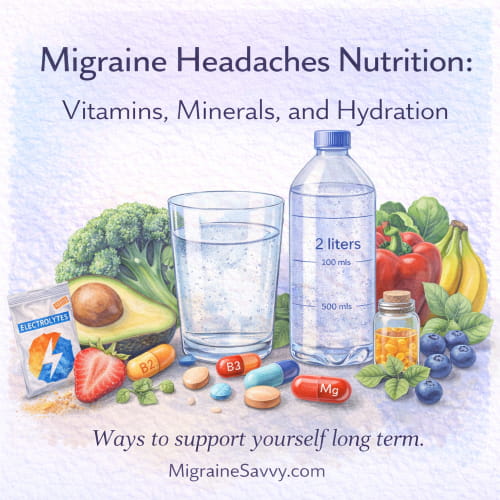 Understanding migraine headaches nutrition may help you identify foods and nutrients that support better migraine management
And the quality of that food matters.
Food is fuel for the brain, and the migraine brain can be especially sensitive to nutritional changes.
Understanding how nutrition affects migraine attacks may help you make small dietary adjustments that support better long-term migraine management.
Can Your Diet Affect Migraine Attacks?
Yes. Diet can influence migraine in several ways.
Certain foods may trigger attacks in some people, while other foods may support overall neurological health.
Common dietary factors linked to migraine include:
- blood sugar fluctuations
- dehydration
- food intolerances
- nutrient deficiencies
- digestive health
Skipping meals or becoming dehydrated may also trigger attacks in some individuals.
At the same time, improving overall nutrition may help reduce the frequency or severity of migraine attacks for some people.
In order for a food to be a migraine trigger, it must be a trigger 100% of the time.
~ Dr. Peter Goadsby, Migraine World Summit
Because migraine triggers vary so much from person to person, learning how your own body responds to different foods takes time.
Why It Can Be Difficult to Identify Food Triggers
Identifying dietary triggers is not always straightforward. Several factors can complicate the process.
Combinations of triggers
Sometimes a food only becomes a trigger when combined with another factor such as:
- stress
- hormonal changes
- poor sleep
- dehydration
Amount consumed
A small amount of a food may be tolerated, while larger portions could trigger symptoms.
For example, a small piece of cheese may be fine, while a larger serving may trigger an attack.
Delayed reactions
Migraine attacks can occur several hours, or even days, after eating a trigger food. This delay makes the connection harder to recognize.
Digestive Health
Digestive issues may also influence migraine.
Some migraine sufferers experience gastric stasis (gastroparesis) during an attack, which slows digestion.
Low stomach acid can also interfere with proper nutrient absorption.
Some people experiment with strategies such as:
- apple cider vinegar before meals
- digestive enzymes
- bitter herbs to stimulate digestion
Always speak with your healthcare professional before introducing supplements.
The only enzymes I take are → MassZymes
How to Start Your Migraine Headaches Nutrition Improvement Plan
One of the most effective ways to understand how food affects your migraines is to track your diet carefully.
Keep a food and symptom diary
A migraine food log can help identify patterns over time.
Record:
- everything you eat and drink
- suspected triggers
- migraine attacks and symptoms
- medications taken
Over time patterns may begin to appear.
If you suspect a particular food is a trigger, try eliminating it for several weeks and observe whether symptoms improve.
Tracking your food, supplements, and migraine symptoms can make it much easier to identify patterns.
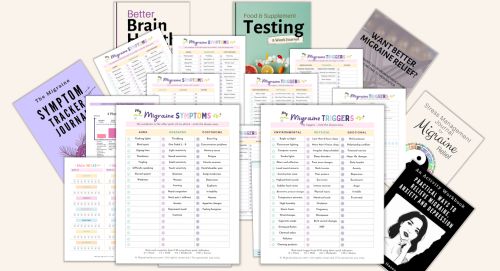
That’s why I created the 8-Week Food & Supplement Testing Journal — a guided system with weekly prompts that build on each other, using beneficial foods, supplements and other fun changes that helps you test, track and monitor migraine symptoms while you test potential triggers.
→ Look inside the 8-Week Food & Supplement testing plan
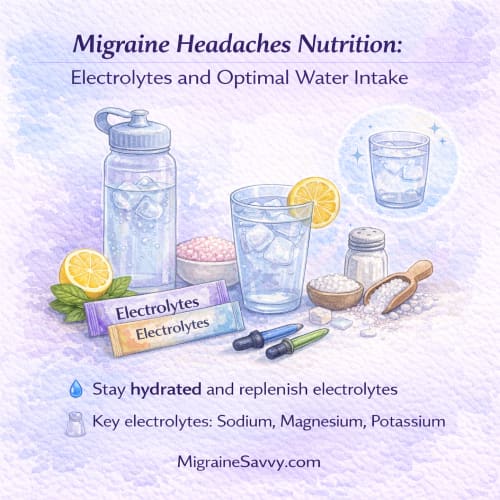
5 Practical Tips to Improve Migraine Headaches Nutrition
Improving nutrition does not necessarily require a complicated diet. Small adjustments can make a difference.
1. Eat regular meals
The migraine brain tends to prefer routine.
Skipping meals can lead to blood sugar drops that may trigger attacks.
2. Moderate carbohydrate intake
Large amounts of carbohydrates can cause blood sugar spikes followed by rapid drops, which may provoke migraine in some individuals.
3. Stay properly hydrated
Dehydration is a well-known migraine trigger.
Drink filtered water regularly throughout the day.
If hydration is a trigger for you, read more here:
→ The Best Remedy for Dehydration Headache
4. Experiment with removing common triggers
Some people experiment with temporarily removing foods such as:
- sugar
- gluten
- dairy
This can help determine whether sensitivities exist.
5. Consider non-food triggers
Migraine attacks are rarely caused by food alone. Other factors include:
- sleep deprivation
- hormonal changes
- stress
- bright lights
- infections
Reducing overall trigger load may help improve migraine control.
Foods That May Support Migraine Headache Health
Certain foods contain nutrients that support neurological health and may help reduce migraine frequency for some individuals.
Examples include:
Magnesium-rich foods
- Spinach
- Whole grains
- Black beans
- Nuts and seeds
Calcium-rich vegetables
- Spinach
- Kale
- Broccoli
Riboflavin (Vitamin B2) foods
- Dairy products
- Almonds
- Whole grains
- Eggs
- Chicken
Tryptophan-rich foods
- Black eyed peas
- Turkey
- Pumpkin seeds
- Walnuts
- Sesame seeds
Herbs and natural foods sometimes used in migraine diets include:
- Peppermint
- Cayenne pepper
- Garlic
- Ginger
- Fish oil [2]
These foods are not cures, but they may support overall nutritional balance.
Food Sources of Beneficial Vitamins for Migraine Reduction
Research has identified several nutrients that may play a role in migraine prevention.
Magnesium
Magnesium deficiency has been observed in many migraine patients.
Food sources include:
- leafy greens
- nuts and seeds
- whole grains
- oily fish
- quinoa
Vitamin B2 (Riboflavin)
Some studies suggest that 400 mg of riboflavin daily may reduce migraine frequency.
Food sources include:
- eggs
- organ meats
- dairy products
- green vegetables
- fortified grains
Coenzyme Q10 (CoQ10)
CoQ10 supports cellular energy production.
Food sources include:
- beef
- chicken
- sardines
- mackerel
- broccoli
- spinach
Many migraine researchers believe mitochondrial energy production may play a role in migraine development. Nutrients such as CoQ10, magnesium, and riboflavin are often studied because they support cellular energy production within mitochondria. Supporting mitochondrial function may help improve brain energy metabolism in some people living with migraine.
Vitamin B12
Vitamin B12 plays an important role in nervous system health.
Food sources include:
- liver
- beef
- fish
- eggs
- dairy products
- fortified plant milks
Alpha-Lipoic Acid
This antioxidant may help support mitochondrial function.
Food sources include:
- red meat
- spinach
- tomatoes
- broccoli
- Brussels sprouts
While food sources contribute valuable nutrients, therapeutic doses used in migraine studies are often obtained through supplements.
Always discuss supplementation with your healthcare provider.
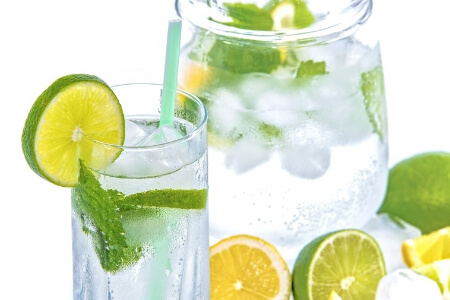
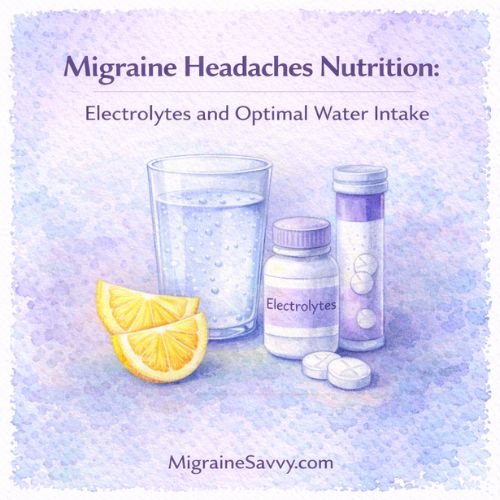 Correct hydration and electrolytes for migraine support means drinking enough for your weight
Are You Drinking Enough Water?
Proper hydration is a crucial part of migraine headaches nutrition.
Some experts recommend drinking approximately one litre of water per 23 kilograms of body weight each day.
For example, a person weighing 68 kg may require about 3 litres of water daily.
To calculate how much water you need to drink a day on average:
To use kilograms: divide your weight by 23. So an example for 68 kilograms, divided by 23 equals 100 oz which is 2.95652 or 3 liters. Drink 3 liters of water each day, preferably with a bit of salt.
To use pounds: take your weight times 2/3rds. To calculate how many glasses to drink every day, just divide that by 8.
Confused? Here is an example - if you weigh 150 lbs then 150 times 2/3 =100 oz and then 100 divided by 8 is approximately 12.5 glasses of water.
Hydration needs vary depending on:
- activity level
- climate
- medications
- illness
Some migraine sufferers also experiment with adding a small pinch of mineral salt to water to support electrolyte balance.
If dehydration frequently triggers headaches for you, you may want to read:
→ The Best Remedy for Dehydration Headache
Electrolytes, Hydration and Migraine
Hydration is not only about drinking enough water. Your body also relies on electrolytes to regulate fluid balance, nerve signaling, and muscle function. These minerals carry electrical charges that help your brain and nervous system function properly.
For people living with migraine, maintaining the right electrolyte balance may help support hydration and neurological stability.
The three key electrolytes most often discussed in migraine nutrition include:
Sodium
Sodium helps regulate fluid balance in the body and supports nerve transmission. When sodium levels drop too low, symptoms such as headaches, fatigue, and dizziness can occur. Some migraine sufferers find that adding a small pinch of mineral salt to water improves hydration.
Potassium
Potassium works closely with sodium to maintain proper fluid balance inside and outside cells. Good dietary sources include leafy greens, avocados, bananas, potatoes, and legumes.
Magnesium
Magnesium plays an important role in nerve signaling, muscle relaxation, and energy production. Magnesium deficiency is commonly observed in migraine sufferers, which is why magnesium-rich foods or supplements are often recommended.
Maintaining a balance between water and electrolytes may help support proper hydration and reduce the likelihood of dehydration-related headaches.
If dehydration is a trigger for you, you can learn more about hydration strategies here:
→ The Best Remedy for Dehydration Headache
Test Foods and Supplements in a Structured Way
Strategically find which foods and supplements may help reduce attacks
If you suspect that certain foods or supplements may be affecting your migraine attacks, it can be very difficult to identify patterns without a clear system.
Testing foods randomly often leads to confusion, because symptoms may appear hours or even days later. This structured testing plan guides you to introduce foods, supplements, and a few other things to benefit your overall health gradually while monitoring symptoms and reactions over the course of 8-weeks.
My Food & Supplement – 8 Week Testing Plan helps you:
- test foods and supplements more systematically
- not just any food or supplements but those known to help with migraine
- recognize patterns that develop over time
- build a clearer understanding of what supports your migraine and health
It’s a structured plan with weekly prompts that build from one week to the next, guiding your food and supplement experiments.
Over time this process can help reveal patterns and identify which foods or supplements may be contributing to your migraine attacks... or not!
→ Start the 8-week migraine food and supplement testing plan

Final Thoughts
Migraine headaches nutrition is not about following a perfect diet.
Instead, it is about learning how your body responds to different foods and making adjustments that support your overall health.
For many people, improving nutrition involves:
- identifying trigger foods
- maintaining regular meals
- improving hydration
- ensuring adequate nutrient intake
Small changes, tracked over time, can sometimes make a meaningful difference in migraine management.
Keep experimenting, keep learning, and work with healthcare professionals whenever possible to develop a strategy that works for you.
Ready to take the next step?
Choose the next step that fits where you are right now.


FOOD & DIETS Related Articles

MIGRAINE SAFE RECIPES Related Articles

References for Migraine Headaches Nutrition Plan:
1. WebMD Weight Loss Clinic, Elaine Magee, MPH, RD (2019) Eat to Minimize Your Migraines. Available [online] at: https://www.onhealth.com/content/1/migraines_eat_to_minimize_your_migraines
2. Medical University of South Carolina (MUSC Health) Nutrition Guide for Migraines. Available [online] at: https://muschealth.org/medical-services/ent/otology/vertigo/nutrition
3. Weil, A. M.D. 8 Weeks to Optimum Health. Warner Books: London, UK.

CATEGORIES
Migraine Types
Symptoms
Migraine Causes
Migraine Triggers
Associated Migraine Conditions
Treatment Options
Prevention Strategies
Medications
Migraine Relief
Complementary Treatments
Migraine Help
Food & Diets
Recipes
Meditation
Your Migraine Stories
Patient Education on Migraine Headaches
MORE SUPPORT
Free Printable Downloads
Migraine Relief Secrets 5-Week eCourse
Free Migraine Pain Management Workshop
Free Module 1 - Migraine Pain Management Course
Free Brain Health Challenges
NEWSLETTER
Practical Tips & Tools for
migraine prevention
Get weekly updates.
CONTACT ME
contact-me@migrainesavvy.com
PRIVACY // TERMS & DISCLAIMERS // REFUND POLICY // AFFILIATE DISCLOSURE // ADVERTISE // CONTACT // SITEMAP // DONATE // SHOP
Medical Disclaimer: The information on MigraineSavvy.com is provided for educational purposes only and should not be used as a substitute for professional medical advice or psychological advice, diagnosis, or treatment. Always consult your healthcare provider before making any healthcare decisions. No content on this website establishes a doctor-patient relationship, and MigraineSavvy.com does not provide medical advice or assume any liability for how the information is used.
By using this website, you agree to the Terms of Use and Privacy Policy.
Copyright © 2010- MigraineSavvy.com. All rights reserved regardless of links or attributions. Content may not be reproduced in any form.

Powered by Solo Build It