- Home
- Food & Diets
Foods to Prevent Migraine Headaches: A Strategic Nutrition Approach
Certain foods to prevent migraine headaches may help reduce neurological load, stabilize blood sugar, and support recovery between attacks.
It's not about finding one “safe list” and avoiding everything else. It’s about understanding how nutrition influences your nervous system, your digestion, your energy levels, and your recovery after an attack.
Food can act as a trigger for some people. But more often, food influences threshold — your brain’s tolerance for stress.
When nutrition is stable, your system is more resilient. When it’s chaotic, your threshold drops.
Over the years, I’ve moved away from strict elimination thinking and toward a structured, whole-nutrition strategy that supports both prevention and recovery. This page walks you through that approach.
 Nutrient-dense foods that may help support brain health and reduce migraine frequency as part of a strategic nutrition approach
How Nutrition Influences Migraine Prevention
Migraine is a neurological condition. Nutrition does not “cure” it — but strategic foods to prevent migraine headaches can significantly influence:
- Blood sugar stability
- Inflammation levels
- Hormonal balance
- Digestive function
- Energy recovery after attacks
Irregular eating, dehydration, or nutrient depletion can increase neurological load and lower your threshold.
If you haven’t yet explored how threshold and stacking work, read:
Nutrition fits inside that bigger framework.
Why “Safe Migraine Food” Is Not a Simple List
You may have seen lists claiming certain foods are “migraine safe” or “migraine triggers.”
The reality is more nuanced.
Research suggests that only about half of people with migraine have clear, consistent food triggers. Even then, triggers can:
- Accumulate over 24–72 hours
- Interact with stress or sleep disruption
- Be confused with prodrome cravings
For example, chocolate is often blamed — but cravings can occur because an attack has already begun neurologically.
Elimination diets can be useful short-term tools. But they are not meant to become lifelong restriction plans.
If you’re exploring dietary patterns, you may want to read:
The goal is clarity — not fear of food.
A Recovery-Focused Approach for Foods to Prevent Migraine Headaches
This is where my thinking shifted.
For years, I focused mostly on avoiding triggers. What helped me more long-term was asking:
How can I nourish my body during and after an attack?
After long migraine episodes — especially multi-week attacks — I felt depleted, weak, and nutritionally behind. That’s when I began experimenting with nutrient-dense recovery meals.
Why Digestion Matters in Migraine
During an attack, digestion often slows (gastric stasis). Appetite drops. Nausea interferes with eating. Between attacks, some people experience ongoing digestive sensitivity.
When digestion is compromised, even healthy food may not be absorbed efficiently.
Supporting digestion during recovery can help restore:
- Electrolytes
- Protein intake
- Micronutrient levels
- Energy stability
The Puréed Nutrient-Dense Method
On the recommendation of a doctor with a background in nutrition, I began experimenting with puréed, nutrient-dense meals after long attacks.
This method focuses on:
- High-quality protein
- Cooked vegetables
- Healthy fats
- Lower carbohydrate load (for some people)
- Easier digestion
Blending cooked meals improves texture and may reduce digestive effort, especially when appetite is low.
Here is how the method works in practice:
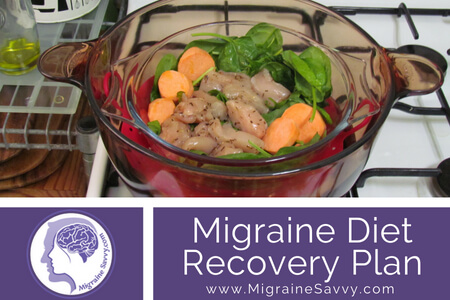
- Gently steam protein and vegetables together rather than aggressively boiling.
- Use minimal water - just enough to prevent scorching.
- Do not discard the cooking liquid.
- Once softened, blend the entire contents - solids and liquid - into a thick purée or soup-like consistency.
- Reheat gently before serving if needed.
Instead of discarding the cooking water (where many minerals and micronutrients leach), the entire liquid is retained and blended into the meal. That means electrolytes, amino acids, and water-soluble nutrients remain in the final dish, creating a water-rich, nutrient-dense recovery meal that supports hydration and absorption.
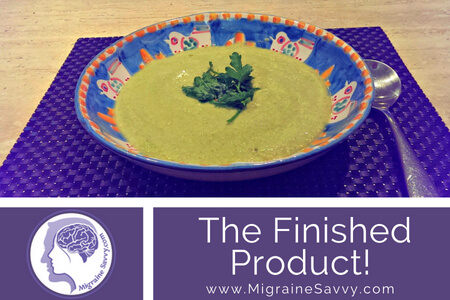 A nutrient-dense, water-rich recovery meal designed to support hydration and replenishment after a migraine attack
When reheating, I add:
- Two tablespoons of avocado oil, organic olive oil, or macadamia oil (I rotate these depending on availability and tolerance. Ghee can also add flavor, though about two teaspoons is usually enough.)
- 1/4 teaspoon of salt to support electrolyte balance
The added fats increase caloric density and improve absorption of fat-soluble nutrients, while the salt helps replenish sodium that may be depleted during prolonged attacks.
The texture can be adjusted depending on tolerance - thicker if digestion is strong, thinner if nausea is present.
This is strategic recovery using nutrition.
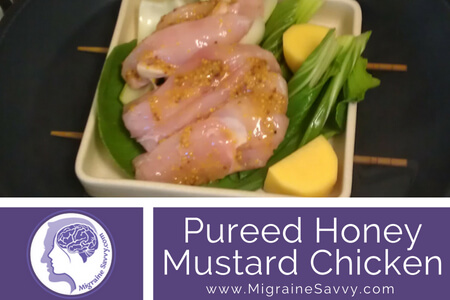
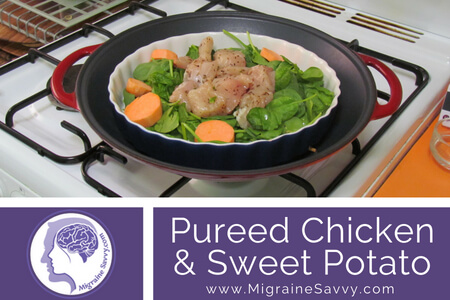
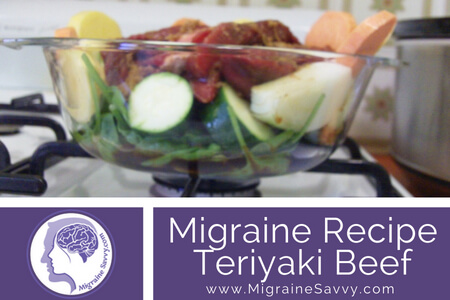
Examples include:
- Chicken with sweet potato and greens
- Beef stew with root vegetables
- High-protein vegetable blends
Here are some of my favorite recipes and a plan to help you get started:
Bone Broth & Hydration Support
Hydration and mineral balance are essential during and after migraine attacks.
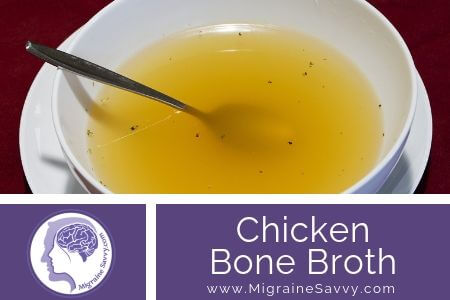
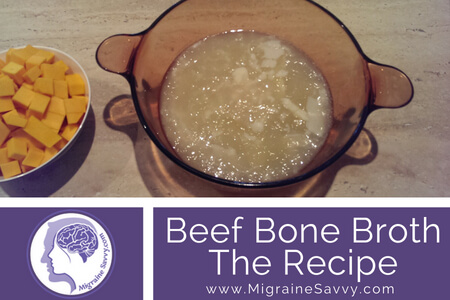
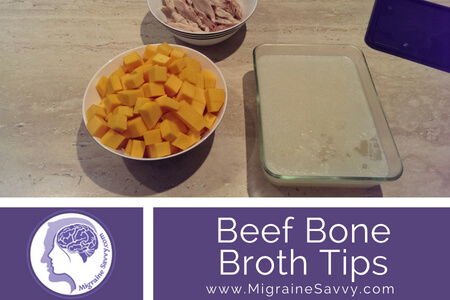
Bone broth can provide:
- Fluids
- Electrolytes
- Collagen and amino acids
- Gentle nourishment when appetite is low
Adding grated ginger may help ease nausea for some people.
These are supportive tools — not miracle cures — but they can make recovery smoother.
You may find these helpful:
Blood Sugar & Threshold Stability
One of the most overlooked aspects of migraine food is blood sugar stability.
Skipping meals, eating erratically, or consuming large swings in carbohydrates can:
- Increase stress hormone release
- Destabilize energy
- Lower migraine threshold
Simple stabilizers often include:
- Regular meal timing
- Protein at each meal
- Avoiding long fasting windows (unless medically supervised)
- Adequate hydration
For many people, rhythm matters more than perfection.
Digestive Sensitivity & Migraine
Some individuals notice:
- Headaches after eating
- Histamine sensitivity
- Ongoing bloating or reflux
- Low stomach acid symptoms
Digestive dysfunction may contribute to overall inflammatory load.
If this resonates, you may want to read:
→ Get a Headache After Eating? It Could Be Histamine Intolerance
Any supplements (such as digestive enzymes) should be discussed with your healthcare provider before use.
Building Your Personal Migraine Food Strategy
Rather than eliminating everything at once, use structured experimentation.
Track:
- What you eat
- Timing
- Symptoms before, during, and after attacks
- Energy levels
- Recovery duration
Food changes should be layered slowly and evaluated over weeks, not days.
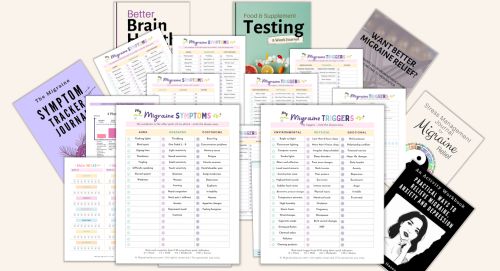
Inside my Migraine Pain Management Course, I include an 8-week food experiment journal designed to help you test patterns in a systematic way instead of guessing.
→ Explore the 8-Week Food Experiment inside the Migraine Pain Management Course (first module free)
If you want the standalone 8-week food experiment journal to test your patterns systematically, you can get it here
→ Food & Supplement Testing Journal

WANT HELP WITH FOOD ?

MIGRAINE PAIN MANAGEMENT COURSE
A structured 8-week food experiment designed to help you identify patterns and refine your migraine prevention strategy → click here
A Strategic Nutrition Approach to Migraine Prevention
Using foods to prevent migraine headaches is not about restriction — it’s about nourishment and strategy.
It is about:
- Supporting recovery
- Stabilizing threshold
- Nourishing your nervous system
- Reducing physiological stress
For some people, that means identifying true triggers. For others, it means stabilizing rhythm and improving digestive resilience.
Prevention is layered.
Nutrition is one layer — but it is an important one.
Read More on Foods to Prevent Migraine Headaches
Foundational Nutrition Strategy
Recovery & Therapeutic Recipes
Structured Diet Approaches
Practical Meal Collections
Ready to take the next step?
Choose the next step that fits where you are right now.



CATEGORIES
Migraine Types
Symptoms
Migraine Causes
Migraine Triggers
Associated Migraine Conditions
Treatment Options
Prevention Strategies
Medications
Migraine Relief
Complementary Treatments
Migraine Help
Food & Diets
Recipes
Meditation
Your Migraine Stories
Patient Education on Migraine Headaches
MORE SUPPORT
Free Printable Downloads
Migraine Relief Secrets 5-Week eCourse
Free Migraine Pain Management Workshop
Free Module 1 - Migraine Pain Management Course
Free Brain Health Challenges
NEWSLETTER
Practical Tips & Tools for
migraine prevention
Get weekly updates.
CONTACT ME
contact-me@migrainesavvy.com
PRIVACY // TERMS & DISCLAIMERS // REFUND POLICY // AFFILIATE DISCLOSURE // ADVERTISE // CONTACT // SITEMAP // DONATE // SHOP
Medical Disclaimer: The information on MigraineSavvy.com is provided for educational purposes only and should not be used as a substitute for professional medical advice or psychological advice, diagnosis, or treatment. Always consult your healthcare provider before making any healthcare decisions. No content on this website establishes a doctor-patient relationship, and MigraineSavvy.com does not provide medical advice or assume any liability for how the information is used.
By using this website, you agree to the Terms of Use and Privacy Policy.
Copyright © 2010- MigraineSavvy.com. All rights reserved regardless of links or attributions. Content may not be reproduced in any form.

Powered by Solo Build It