- Home
- Migraine Symptoms
- Early Signs of Migraine Headaches
Early Signs of Migraine Headaches: Your Warning Signals
Many people assume a migraine begins when the head pain starts. But in reality, early signs of migraine headaches can appear hours or even days before the pain phase begins.
These early warning symptoms are part of the prodrome phase of a migraine attack. Learning to recognize them can give you valuable time to take action and possibly stop the attack before it becomes severe.
For many migraine sufferers, recognizing these early signals is one of the most powerful tools for managing migraine attacks.
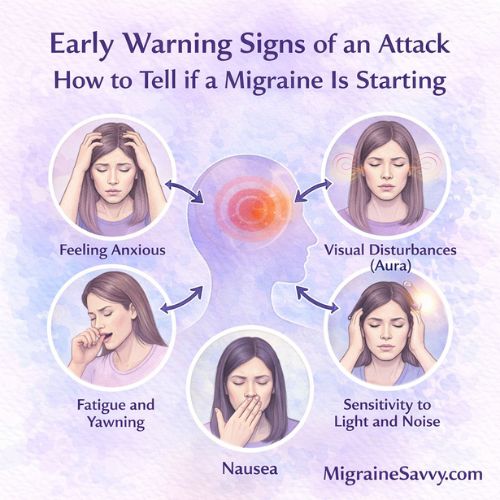 Early signs of migraine headaches can begin hours or days before the pain phase and may include mood changes, food cravings, fatigue, and neck stiffness
Early warning symptoms are only one part of the migraine process. If you'd like a complete overview of how migraine symptoms develop throughout an attack, see my article on migraine symptoms and phases.
What Are Early Signs of Migraine Headaches?
The early signs of migraine headaches are subtle changes that occur before the main headache phase begins. These symptoms are caused by neurological changes in the brain that start the migraine process.
Research shows that 40–60% of migraine attacks are preceded by prodrome symptoms, which can begin several hours or even a full day before the headache appears.
These warning signs act like an internal alarm system, telling you that a migraine attack may be developing.
Common Early Migraine Warning Signs
Early migraine symptoms vary widely between individuals, but some of the most common signs include:
- unusual food cravings (often sweet or salty foods)
- increased hunger or loss of appetite
- mood changes such as irritability, anxiety, or depression
- unusual fatigue or excessive yawning
- neck stiffness or muscle tension
- increased urination
- difficulty concentrating
- sensitivity to light or sound
- cold hands or feet
- feeling unusually energetic or restless
Some people also notice cold-like symptoms, such as a runny nose or sinus pressure, before a migraine begins.
Because these symptoms can seem unrelated to migraine, many people do not recognize them as warning signs until they start tracking their attacks.
How to Tell if a Migraine Is Starting
One challenge with early migraine symptoms is that they can be easy to mistake for normal daily experiences.
For example, fatigue, irritability, or food cravings can happen for many reasons. What makes them migraine warning signs is the *pattern they follow before an attack*.
Here are a few clues that a migraine may be developing:
1. The symptoms appear in the same pattern each time
Many people notice the same warning signals before every attack. For example, you might always experience neck stiffness and excessive yawning several hours before the headache begins.
2. Multiple symptoms appear together
A single symptom may not mean much, but when several appear at the same time — such as fatigue, mood changes, and light sensitivity — it can signal that a migraine attack is starting.
3. The symptoms appear before your usual migraine triggers
Some people mistakenly think a trigger caused their migraine, when in fact the attack had already begun. For example, craving chocolate may actually be an early migraine symptom rather than the cause of the attack.
4. The symptoms occur hours before the headache
Early migraine warning signs often appear long before the pain phase begins. Recognizing this timing can help you respond earlier and reduce the severity of the attack.
Over time, paying attention to these patterns can help you recognize when a migraine is developing and take action sooner.
Why Recognizing Early Migraine Symptoms Matters
Learning to recognize your personal early migraine symptoms can significantly improve how you manage attacks.
When you identify your warning signs early, you may be able to:
- take abortive medication sooner
- reduce exposure to triggers
- rest before symptoms worsen
- use additional migraine relief strategies
Many neurologists emphasize that timing is critical when treating migraine attacks. Acting during the early stages of an attack often improves the effectiveness of treatment.
The Stages of a Migraine Attack
Early warning symptoms are only one part of the migraine process.
Most migraine attacks unfold in several stages:
- Prodrome (early warning symptoms)
- Aura (in some individuals)
- Headache or pain phase
- Postdrome recovery phase
Not everyone experiences all four stages, but understanding these phases can make migraine attacks easier to recognize and manage.
If you want to learn more about the full migraine cycle, read my detailed article here:
→ The 4 Stages of a Migraine Attack
Learning Your Personal Migraine Signals
One of the most helpful things you can do is learn your individual migraine warning signs.
For example, I once noticed a migraine beginning while getting my hair washed at the salon. The scent of the shampoo triggered a reaction I could actually taste, and I immediately felt my heart rate increase.
At first my reaction was frustration — “Oh no, not another migraine.”
But the stylist said something that changed my perspective completely.
She said: “How wonderful that you have an early warning system.”
That simple comment helped me realize that these symptoms were not just part of the problem — they were actually part of the solution.
Your early migraine symptoms are signals from your body. When you learn to recognize them, you gain a valuable opportunity to take action sooner and reduce the impact of the attack.
Taking Action Early
When you notice your early migraine symptoms, acting quickly can make a significant difference.
Many people find it helpful to combine several strategies, such as:
- taking prescribed migraine medication
- resting in a quiet, dark room
- drinking water or electrolyte fluids
- stabilizing blood sugar with light food
- avoiding bright lights or strong smells
Over time, learning to respond to your early warning signs can help shorten migraine attacks and reduce their overall severity.
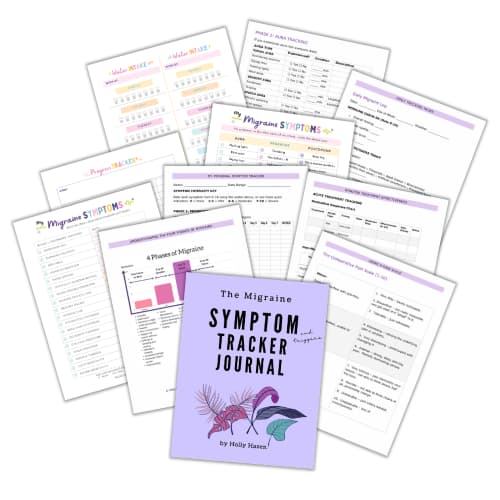
Migraine Symptom Tracker Journal
Track Your Migraine Symptoms with Greater Clarity
If you are trying to understand your migraine attacks better, tracking symptoms consistently can reveal patterns that are easy to miss from memory alone.
Migraine attacks often develop through several stages, including early warning signs and recovery symptoms. A structured symptom journal helps you capture the full migraine cycle so you can see how your attacks unfold over time.
Tracking symptoms can help you:
- recognize early warning signs of an attack
- understand patterns across the migraine cycle
- see how medications and treatments are working
- prepare clearer information for doctor visits
When you start tracking migraine symptoms more carefully, it often becomes much easier to understand your own migraine patterns and manage attacks more effectively.
→ Start tracking your migraine symptoms
Ready to take the next step?
Choose the next step that fits where you are right now.



MIGRAINE SYMPTOMS Related Articles



CATEGORIES
Migraine Types
Symptoms
Migraine Causes
Migraine Triggers
Associated Migraine Conditions
Treatment Options
Prevention Strategies
Medications
Migraine Relief
Complementary Treatments
Migraine Help
Food & Diets
Recipes
Meditation
Your Migraine Stories
Patient Education on Migraine Headaches
MORE SUPPORT
Free Printable Downloads
Migraine Relief Secrets 5-Week eCourse
Free Migraine Pain Management Workshop
Free Module 1 - Migraine Pain Management Course
Free Brain Health Challenges
NEWSLETTER
Practical Tips & Tools for
migraine prevention
Get weekly updates.
CONTACT ME
contact-me@migrainesavvy.com
PRIVACY // TERMS & DISCLAIMERS // REFUND POLICY // AFFILIATE DISCLOSURE // ADVERTISE // CONTACT // SITEMAP // DONATE // SHOP
Medical Disclaimer: The information on MigraineSavvy.com is provided for educational purposes only and should not be used as a substitute for professional medical advice or psychological advice, diagnosis, or treatment. Always consult your healthcare provider before making any healthcare decisions. No content on this website establishes a doctor-patient relationship, and MigraineSavvy.com does not provide medical advice or assume any liability for how the information is used.
By using this website, you agree to the Terms of Use and Privacy Policy.
Copyright © 2010- MigraineSavvy.com. All rights reserved regardless of links or attributions. Content may not be reproduced in any form.

Powered by Solo Build It