- Home
- Migraine Types
- Stages of a Migraine
Stages of a Migraine: The 4 Phases Explained
Most migraine attacks follow a recognizable pattern known as the stages of a migraine. Understanding these stages can help you recognize early warning signs and take action sooner, which may reduce the severity or duration of an attack.
So how many stages of a migraine are there?
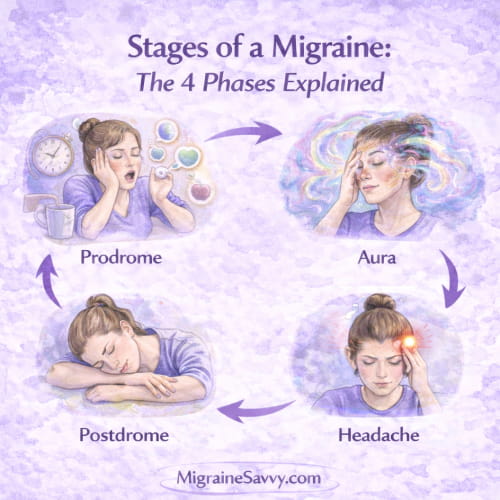 A migraine attack often begins with prodrome and may progress through aura, headache, and postdrome. Recognizing early warning signs can help you act sooner.
Most experts describe four distinct stages: prodrome, aura, headache, and postdrome. Not everyone experiences every stage, but learning your personal pattern can significantly improve how you manage your migraine attacks.
Let’s walk through each stage so you know what to expect and when to act.
How Many Stages of a Migraine Are There?
There are typically four stages of a migraine:
- Prodrome
- Aura
- Headache
- Postdrome
Some specialists include a fifth recovery phase, but the core migraine cycle consists of four stages.
It is important to understand that not everyone experiences all four stages. Some people never experience aura. Others may experience aura without head pain. Migraine is highly individualized.
Recognizing your own pattern is one of the most powerful tools you have.
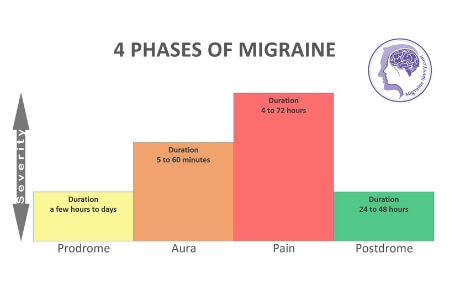
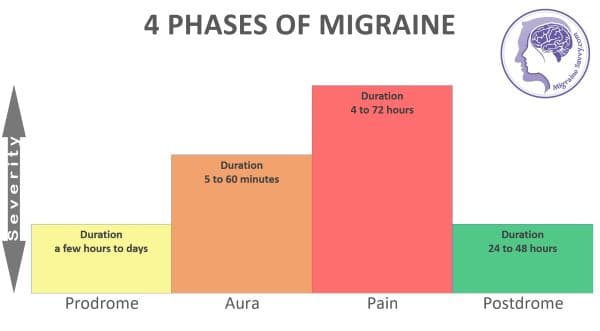 The four stages of a migraine: prodrome, aura, headache, and postdrome, including typical symptoms and timing
How Long Does Each Stage of a Migraine Last?
Each stage has a typical time range, although individual experiences vary.
Prodrome:
Can begin hours to two days before pain starts.
Aura:
Usually develops gradually and lasts between 5 and 60 minutes.
Headache Phase:
Commonly lasts between 4 and 72 hours if untreated.
Postdrome:
May last from 24 to 48 hours or more after pain resolves.
Understanding timing is critical. Treatment is often most effective when used early, particularly during the prodrome stage.
Stage 1 – Prodrome (Early Warning Signs)
The prodrome stage is your early warning system. Symptoms may appear subtle at first but become clearer over time as you learn your pattern.
This is the most important stage to act.
Taking prescribed medication, increasing hydration, resting, or adjusting your schedule during prodrome can reduce the intensity of what follows.
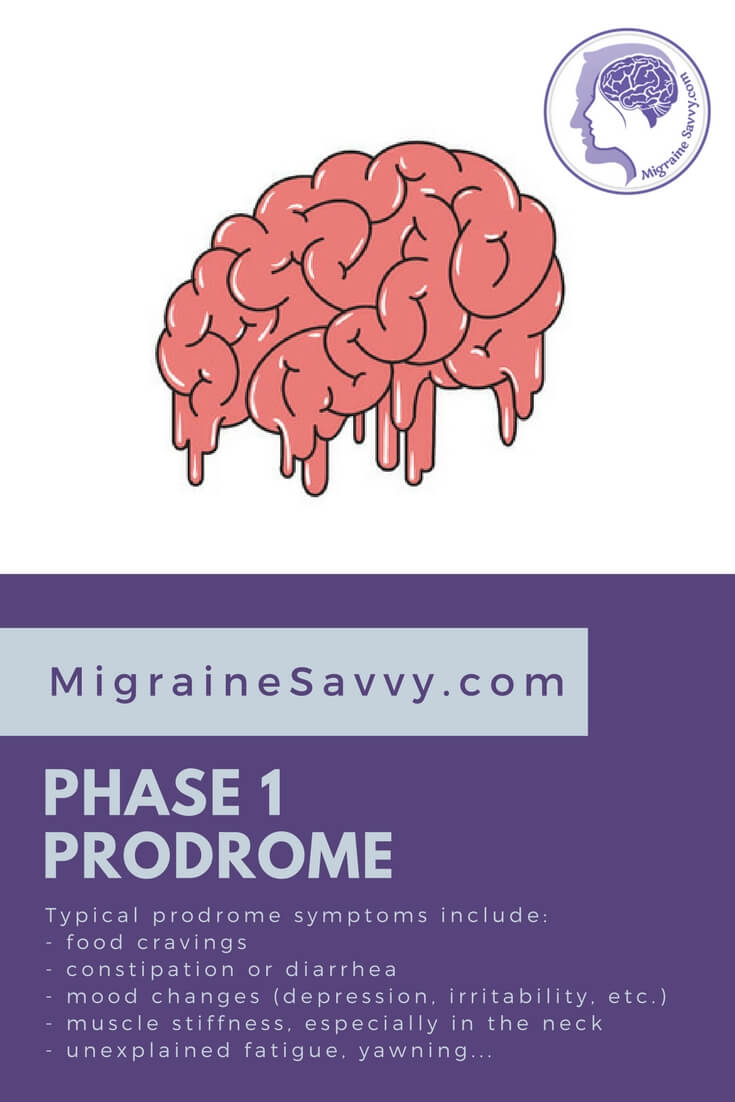 Stage 1: Prodrome — early warning signs before migraine pain begins
Common prodrome symptoms include:
- Food cravings or immense hunger or thirst
- Constipation or diarrhea
- Mood changes like depression, irritability, anger, anxiety
- Neck stiffness
- Fatigue or excessive yawning
- Increased urination
Many people overlook this stage until they begin tracking symptoms consistently.
Stage 2 – Aura (Neurological Symptoms)
Aura does not occur in everyone, but when it does, it can be alarming.
Aura symptoms typically develop gradually and resolve within an hour.
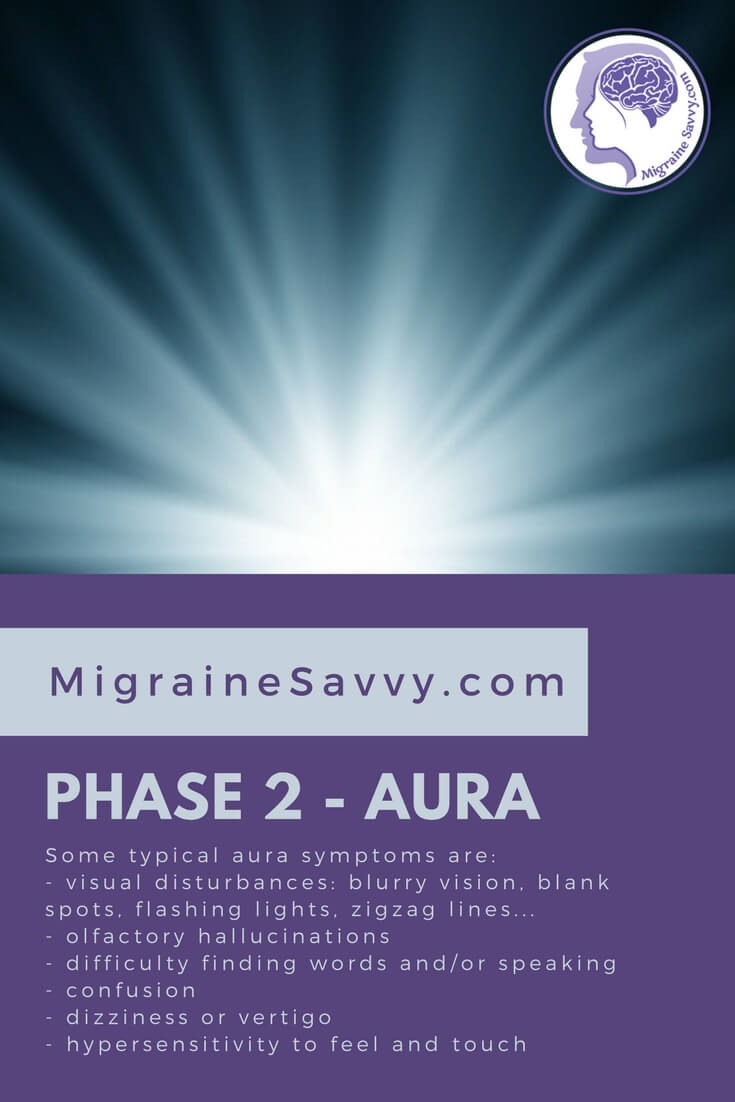 Stage 2: Aura — temporary neurological symptoms before or during migraine
Common aura symptoms include:
- Visual symptoms: flashing lights, wavy lines, spots, blank spots, blurry vision
- Olfactory hallucinations (smelling odors that aren't there)
- Partial paralysis or tingling or numbness of the face or extremities on the side where the headache develops
- Difficulty speaking or finding words
- Confusion
- Dizziness or vertigo
- Auditory hallucinations or decrease in hearing
- Reduced sensation
- Hypersensitivity to feel and touch
Because some aura symptoms can mimic stroke, especially speech difficulty or one-sided weakness, first-time or unusual symptoms should always be evaluated medically. You can read more here: Migraine with Stroke-like Symptoms.
Aura represents a temporary neurological disturbance caused by changes in brain activity. While frightening, it is usually reversible.
Stage 3 – Headache (Pain Phase)
This is the stage most people associate with migraine.
Head pain may be:
- One-sided or bilateral
- Pulsating or throbbing
- Moderate to severe
 Stage 3: Headache — pain and sensory sensitivity
Other symptoms often accompany the pain phase:
- Nausea and vomiting
- Sensitivity to sound (phonophobia)
- Sensitivity to light (photophobia)
- Nasal congestion
- Anxiety or mood changes
- Hot flashes and chills
- Dizziness
- Confusion
The headache phase can last hours or several days. Early treatment during prodrome or aura often leads to better outcomes than waiting until pain is intense.
Stage 4 – Postdrome (Migraine Hangover)
Postdrome occurs after the head pain subsides.
Many people describe this stage as a migraine hangover.
 Stage 4: Postdrome — recovery after a migraine attack
Symptoms may include:
- Fatigue
- Brain fog
- Poor concentration
- Mood changes
- Mild residual headache or discomfort
Some people experience temporary relief or even euphoria after a prolonged attack.
Recovery can take hours or even a full day, depending on the severity of the episode.
Do All Migraines Have All Stages?
No.
Some people never experience aura. Some skip prodrome. Others may have aura without head pain.
The stages of a migraine provide a framework, not a rigid rule.
Tracking your symptoms helps you identify your unique migraine cycle and respond earlier next time. You can track your migraine stages with my Symptom Tracker Journal.
Why Understanding the Stages Improves Treatment
Migraine is a neurological cascade. Once the pain phase is fully established, it becomes more difficult to interrupt.
That is why early recognition matters.
Treating during prodrome or aura may:
- Shorten attack duration
- Reduce pain intensity
- Decrease medication use
- Improve overall migraine control
The earlier you act, the more options you may have.
When to Seek Medical Care
Seek urgent evaluation if you experience:
- Sudden severe “worst headache of your life”
- New neurological symptoms
- Persistent weakness or speech difficulty
- Headache after head injury
- A pattern change that feels significantly different from your usual migraine
Migraine can mimic serious neurological conditions. When in doubt, seek medical attention.
Learn More About Migraine Patterns and Treatment
Final Thoughts
Understanding the stages of a migraine gives you a strategic advantage.
The earlier you recognize the pattern, the earlier you can intervene. That awareness can reduce severity, shorten duration, and help you regain a sense of control.
Migraine is complex, but the stages often follow a predictable sequence. Learn yours. Track it. Act early.
Work with your healthcare provider to refine your treatment plan based on your individual pattern.
Want Help Identifying Your Migraine Pattern?
Recognizing your personal migraine cycle can dramatically change how you respond to attacks.
If you would like step-by-step guidance on tracking symptoms, identifying triggers, and acting early, you can learn more about my migraine management course here. The first module is free.
Ready to take the next step?
Choose the next step that fits where you are right now.



MIGRAINE TYPES Related Articles



CATEGORIES
Migraine Types
Symptoms
Migraine Causes
Migraine Triggers
Associated Migraine Conditions
Treatment Options
Prevention Strategies
Medications
Migraine Relief
Complementary Treatments
Migraine Help
Food & Diets
Recipes
Meditation
Your Migraine Stories
Patient Education on Migraine Headaches
MORE SUPPORT
Free Printable Downloads
Migraine Relief Secrets 5-Week eCourse
Free Migraine Pain Management Workshop
Free Module 1 - Migraine Pain Management Course
Free Brain Health Challenges
NEWSLETTER
Practical Tips & Tools for
migraine prevention
Get weekly updates.
CONTACT ME
contact-me@migrainesavvy.com
PRIVACY // TERMS & DISCLAIMERS // REFUND POLICY // AFFILIATE DISCLOSURE // ADVERTISE // CONTACT // SITEMAP // DONATE // SHOP
Medical Disclaimer: The information on MigraineSavvy.com is provided for educational purposes only and should not be used as a substitute for professional medical advice or psychological advice, diagnosis, or treatment. Always consult your healthcare provider before making any healthcare decisions. No content on this website establishes a doctor-patient relationship, and MigraineSavvy.com does not provide medical advice or assume any liability for how the information is used.
By using this website, you agree to the Terms of Use and Privacy Policy.
Copyright © 2010- MigraineSavvy.com. All rights reserved regardless of links or attributions. Content may not be reproduced in any form.

Powered by Solo Build It